
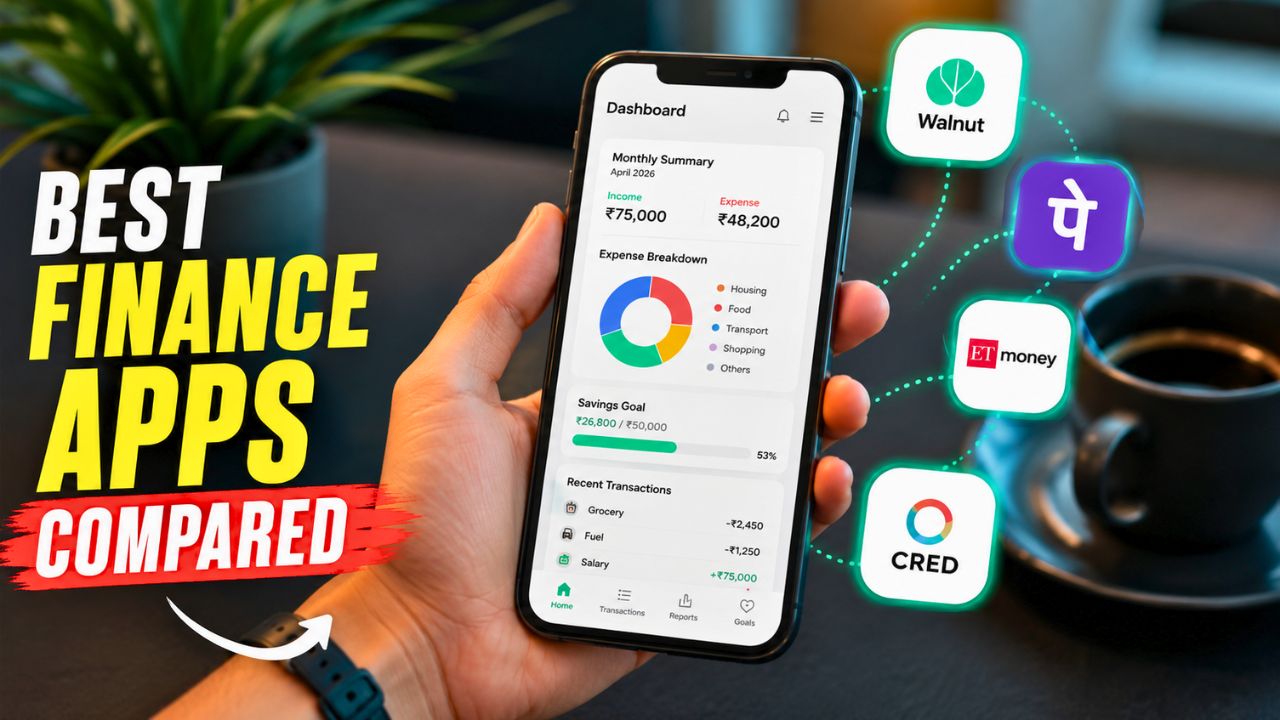
Managing money has become more complicated than ever. Most people now have multiple bank accounts, one or two credit cards, UPI apps, investment platforms, digital wallets, and recurring subscriptions. While technology has made spending easier, it has also made it much harder to understand where your money is actually going.
A few months ago, I opened my banking app to check my balance and realized something surprising. My salary wasn’t disappearing because of one big purchase.
Instead, it was slowly leaking through dozens of small transactions that I barely noticed throughout the month. Food deliveries, online subscriptions, shopping offers, fuel payments, and weekend outings looked harmless individually, but together they created a much bigger problem.
That’s when I started exploring different personal finance dashboard apps. Instead of simply showing bank balances, these apps organize your finances into one place, helping you understand your spending habits, monitor budgets, track investments, and plan your financial goals more effectively.
If you’ve ever wondered which finance dashboard app is actually worth using, this comparison will help you make an informed decision.
What Is a Personal Finance Dashboard App?
A personal finance dashboard app is much more than a regular expense tracker. Think of it as a central hub for your financial life. Instead of opening different apps for banking, budgeting, investments, and credit cards, these platforms bring everything together in a simple dashboard.
Most modern finance dashboard apps can help you monitor your monthly expenses, analyze spending categories, set savings goals, receive bill reminders, and even understand your overall financial health through charts and reports.
The biggest advantage isn’t just convenience. It’s awareness. Once you start seeing where every rupee goes, making smarter financial decisions becomes much easier.
Why More Indians Are Using Finance Dashboard Apps
Digital payments have completely changed the way people spend money. Between UPI, credit cards, online shopping, food delivery apps, and subscription services, money moves much faster than it did a few years ago.
The problem is that our brains don’t always keep up.
It’s surprisingly common to forget recurring subscriptions, underestimate online shopping expenses, or overlook small daily purchases. Over an entire month, these seemingly minor expenses can significantly impact your budget.
A good money management dashboard helps identify these patterns before they become financial problems.
Jupiter – Best All-in-One Finance Dashboard
If you prefer managing your finances from one modern interface, Jupiter is one of the strongest options available for Indian users.
Unlike traditional expense trackers, Jupiter combines banking features with financial insights. The dashboard automatically categorizes spending, highlights monthly trends, and presents your financial activity in a way that’s easy to understand.
Key Features
- Automatic expense categorization
- Monthly spending insights
- Budget tracking
- Smart financial summaries
- Clean and beginner-friendly interface
Pros
- Excellent user experience
- Beautiful dashboard
- Helpful spending analytics
- Easy for beginners
Cons
- Some advanced features depend on the Jupiter ecosystem.
Axio – Best for Automatic Expense Tracking
Formerly known as Walnut, Axio remains one of the most popular personal finance apps in India.
What makes Axio different is its automation. With permission, it reads transaction SMS alerts and automatically records your expenses. This means you don’t have to manually enter every payment you make.
For busy professionals, this saves a significant amount of time while still providing detailed monthly reports.
Key Features
- Automatic transaction tracking
- Credit card bill reminders
- Expense categorization
- Monthly spending reports
- Budget monitoring
Pros
- Highly automated
- Great for credit card users
- Easy to use
Cons
- Requires SMS permissions for full functionality.
FinArt – Best for Privacy-Conscious Users
Many finance apps rely heavily on cloud services, but FinArt takes a different approach by focusing more on local processing wherever possible.
For users who care about privacy while still wanting automated expense tracking, FinArt offers an excellent balance between convenience and data protection.
Key Features
- Smart expense categorization
- Budget planning
- Spending analytics
- Bill reminders
- Monthly financial reports
Pros
- Strong privacy approach
- Detailed analytics
- Reliable automation
Cons
- Interface may feel slightly technical for first-time users.
Wallet by BudgetBakers – Best for Detailed Budget Planning
If you’re serious about budgeting and long-term financial planning, Wallet by BudgetBakers is one of the most feature-rich options available.
Instead of focusing only on daily expenses, the app provides deeper insights into income, savings goals, account balances, and overall financial planning.
Key Features
- Budget planning
- Multiple account support
- Financial reports
- Goal tracking
- Spending analysis
Pros
- Powerful budgeting features
- Excellent reports
- Supports multiple financial accounts
Cons
- Slight learning curve for beginners.
Money Manager – Best for Manual Budget Lovers
Not everyone likes automatic syncing or SMS tracking. Some users simply want complete control over their financial records.
That’s where Money Manager performs well.
Everything is entered manually, which requires more effort but also provides greater flexibility.
Key Features
- Manual expense tracking
- Income management
- Budget planning
- Spending statistics
- Monthly reports
Pros
- Complete control
- No SMS permissions required
- Very detailed reporting
Cons
- Requires consistent manual updates.
Quick Comparison
| App | Best For | Automatic Tracking | Budget Planning | Bill Reminders | Ease of Use |
|---|---|---|---|---|---|
| Jupiter | Overall money management | ✅ | ✅ | Limited | ⭐⭐⭐⭐⭐ |
| Axio | Automatic expense tracking | ✅ | ✅ | ✅ | ⭐⭐⭐⭐⭐ |
| FinArt | Privacy + automation | ✅ | ✅ | ✅ | ⭐⭐⭐⭐☆ |
| Wallet by BudgetBakers | Advanced budgeting | Partial | ✅ | ✅ | ⭐⭐⭐⭐☆ |
| Money Manager | Manual tracking | ❌ | ✅ | ❌ | ⭐⭐⭐⭐☆ |
Which Finance Dashboard App Should You Choose?
There isn’t a single app that’s perfect for everyone.
If you want something simple that works automatically, Axio is an excellent choice.
If you prefer an all-in-one financial experience with modern insights, Jupiter stands out.
Users who value privacy may appreciate FinArt’s approach, while people who enjoy detailed budgeting and long-term planning will likely prefer Wallet by BudgetBakers.
Meanwhile, if you don’t mind manually recording your expenses and want complete control over every transaction, Money Manager continues to be a reliable option.
The best finance dashboard is the one that fits naturally into your daily routine.
Final Thoughts
Choosing between different Personal Finance Dashboard Apps isn’t really about finding the app with the longest feature list. It’s about finding one that helps you understand your financial habits without making money management feel complicated.
Whether you’re trying to control credit card spending, build a monthly budget, track investments, or simply become more aware of your expenses, a good financial dashboard can make a noticeable difference over time.
The sooner you understand where every rupee goes, the easier it becomes to save more, spend wisely, and make better financial decisions without feeling restricted.
Frequently Asked Questions
Which is the best personal finance dashboard app in India?
Jupiter and Axio are among the most popular choices because they combine spending insights with an easy-to-use interface.
Are personal finance dashboard apps safe?
Most reputable apps use secure encryption and authentication. Always download apps from official sources and review their privacy policies before connecting financial accounts.
Can these apps track multiple bank accounts?
Many finance dashboard apps support multiple accounts, allowing users to view their overall financial position from one place.
Do these apps help with budgeting?
Yes. Most modern dashboard apps automatically categorize expenses, making it easier to create realistic monthly budgets and monitor spending habits.
Are these apps free?
Many apps offer free versions with essential features, while premium subscriptions unlock advanced reports, budgeting tools, and additional financial insights.

![How to reduce battery drain after [AndroidiOS version] update](https://unifite.in/wp-content/uploads/2026/10/How-to-reduce-battery-drain-after-AndroidiOS-version-update-218x150.jpg "How to Reduce Battery Drain After an Android or iOS Update (2026)")



![How to reduce battery drain after [AndroidiOS version] update](https://unifite.in/wp-content/uploads/2026/10/How-to-reduce-battery-drain-after-AndroidiOS-version-update-100x70.jpg "How to Reduce Battery Drain After an Android or iOS Update (2026)")
![Best educational apps for adults learning [skill]](https://unifite.in/wp-content/uploads/2026/10/Best-educational-apps-for-adults-learning-skill-100x70.jpg "Best Educational Apps for Adults Learning New Skills in 2026")