
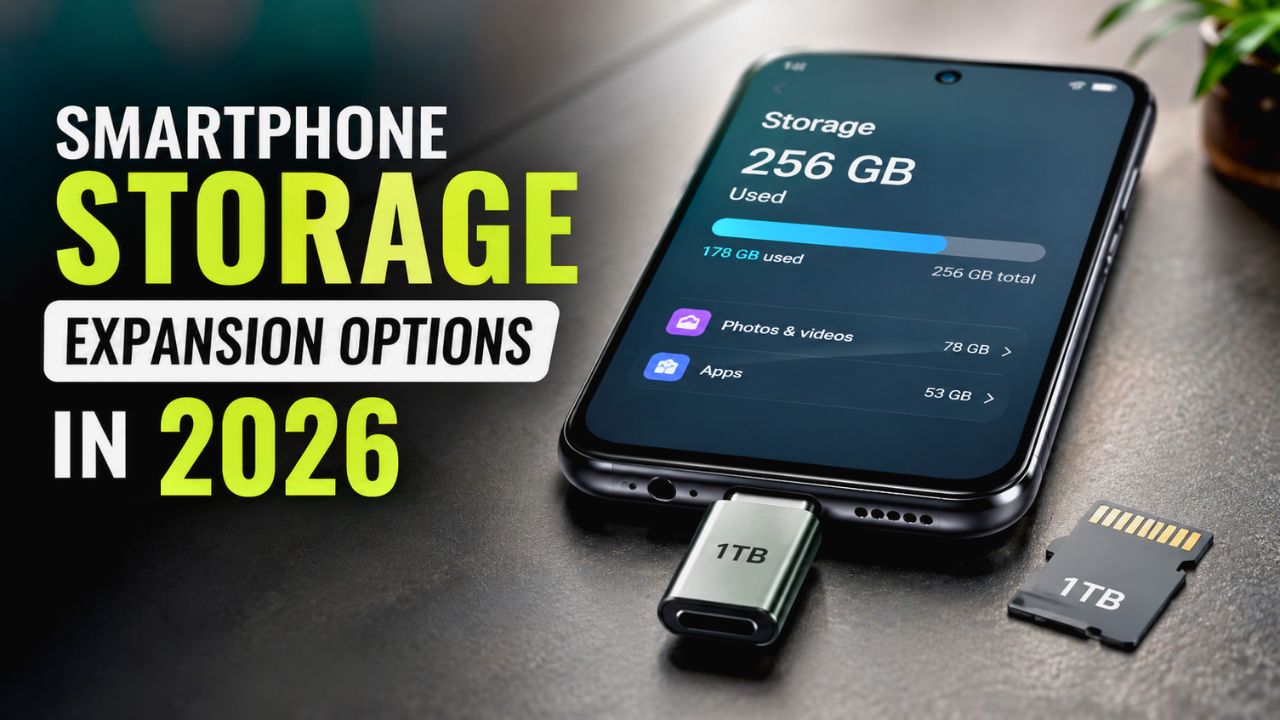
One of the most frustrating things that can happen on a smartphone is seeing the “Storage Almost Full” notification pop up when you’re trying to take a photo, install an app, or download a video. It feels even worse in 2026 because our phones are storing more data than ever before. High-resolution cameras, 4K videos, AI-generated content, and larger mobile apps are consuming storage much faster than they did just a few years ago.
The good news is that running out of storage no longer means you need to buy a new phone immediately. There are several practical storage expansion options available today, and the right choice depends on how you use your device.
Why smartphone storage fills up so quickly in 2026
A few years ago, 64GB of storage felt like plenty. Today, that same capacity can disappear surprisingly fast. Modern smartphone cameras capture larger image files, mobile games often require several gigabytes of storage, and AI-powered features continuously generate and store data locally.
Streaming services also encourage users to download movies, TV shows, podcasts, and music for offline use. Even messaging apps like WhatsApp and Telegram can silently consume tens of gigabytes over time through photos, videos, and document sharing.
This is why understanding storage expansion options has become more important than ever.
microSD cards are still useful, but not for everyone
Despite many smartphone manufacturers moving away from expandable storage, microSD cards remain one of the easiest and most affordable ways to increase available space.
A high-quality microSD card can store thousands of photos, videos, documents, and music files without requiring an internet connection. For users who frequently travel or record videos, expandable storage can still be extremely useful.
Advantages of microSD cards
- Affordable compared to upgrading a phone
- Easy to install and use
- Ideal for photos, videos, and media files
- Available in capacities up to 1TB and beyond
Limitations
- Many premium smartphones no longer include a microSD slot
- Slower than internal storage for some tasks
- Performance varies depending on card quality
For users with compatible phones, a microSD card remains one of the most practical storage solutions available.
Cloud storage is becoming the preferred solution
One of the biggest shifts in 2026 is the growing reliance on cloud storage services. Instead of storing everything directly on a device, users can keep files online and access them whenever needed.
Services such as Google Drive, OneDrive, and iCloud automatically sync photos, documents, and backups across devices. This not only saves space but also provides an extra layer of protection if a phone is lost or damaged.
Cloud storage works especially well for people who have a reliable internet connection and frequently switch between devices.
Benefits of cloud storage
- Access files from anywhere
- Automatic backup and synchronization
- Reduces pressure on internal storage
- Easy sharing and collaboration
The biggest downside is that large files may require internet access to retrieve quickly, and free storage plans often come with limits.
USB-C flash drives are becoming more popular
Many modern smartphones now support USB-C storage devices. These compact flash drives connect directly to the charging port and instantly provide additional storage space.
This option is particularly useful for content creators who record large videos or transfer files between devices regularly.
Instead of uploading files to the cloud, users can simply move them to a portable drive within seconds. USB-C drives have become faster, smaller, and more affordable in recent years, making them an increasingly attractive alternative.
External SSDs offer massive storage capacity
For users who create large amounts of content, external SSDs provide a serious storage upgrade.
Modern external SSDs can offer:
- 500GB
- 1TB
- 2TB
- 4TB or more
Many flagship smartphones now support direct video recording to external drives, allowing users to bypass internal storage limitations completely.
This option may not be necessary for average users, but for photographers, videographers, and mobile content creators, it can be a game changer.
AI-powered storage management is changing everything
An interesting trend in 2026 is the rise of AI-based storage optimization tools. Instead of forcing users to manually delete files, smartphones are becoming smarter about identifying duplicate photos, unused apps, blurry images, and unnecessary downloads.
Many devices can now suggest storage cleanup actions automatically, helping users recover space without spending hours sorting through files. In some cases, these AI tools free up several gigabytes with just a few taps.
Which storage expansion option is best for you?
The answer depends on how you use your smartphone.
Someone who mostly stores photos and videos may benefit from a microSD card or cloud backup. A content creator recording large videos might prefer an external SSD. Users who simply want a hassle-free experience may find cloud storage and AI cleanup tools more convenient.
The important thing is understanding that storage expansion is no longer limited to a memory card. In 2026, users have multiple options, each designed for different needs and budgets.
The biggest mistake smartphone buyers still make
One mistake I still see people making is buying a phone with the lowest storage variant just to save money upfront. It seems like a good idea at first, but six months later they are constantly deleting photos, uninstalling apps, and managing storage alerts.
In many cases, spending slightly more on a higher storage variant can save a lot of frustration later. Storage needs are increasing every year, and what feels sufficient today may not be enough tomorrow.
Final Takeaway
Smartphone storage is becoming more important as apps, photos, videos, and AI features continue to grow in size. Fortunately, users now have more storage expansion options than ever before.
Whether you choose a microSD card, cloud storage, USB-C drive, external SSD, or AI-powered cleanup tools, the best solution depends on your usage habits.
The key is not waiting until your phone is completely full. Planning ahead and choosing the right storage strategy can help your device stay fast, organized, and ready for whatever comes next.