
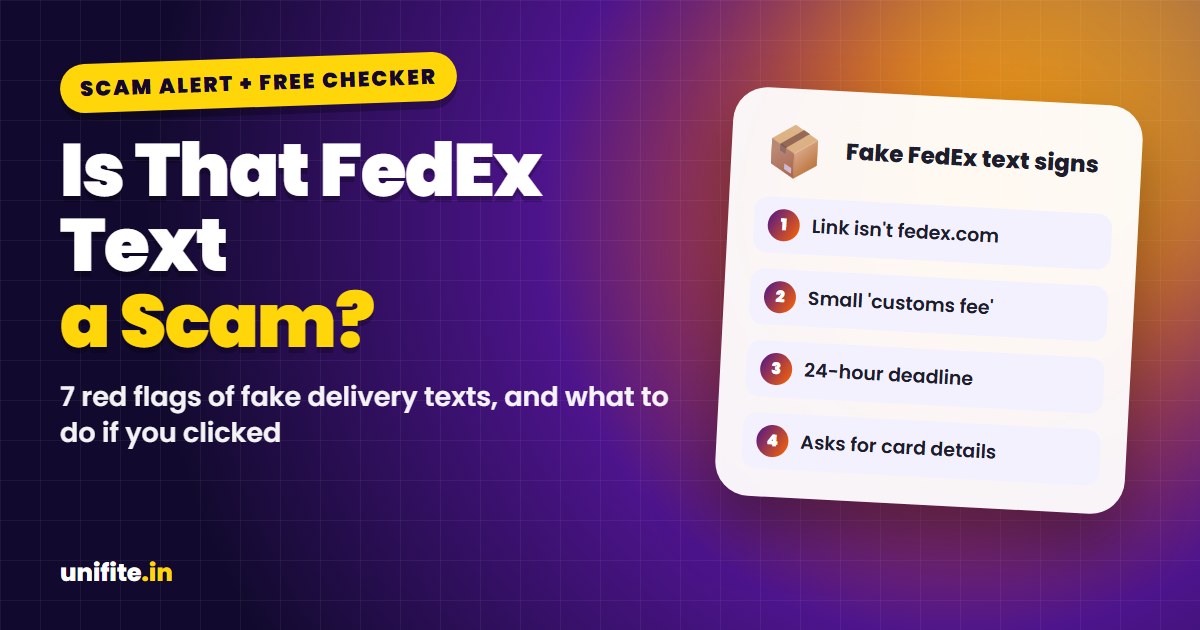
Yes, there is a FedEx scam going around, and it never really stops. Fake texts and emails say a FedEx package is on hold, needs a new address, or owes a small customs or redelivery fee. The link leads to a fake FedEx page that steals your card details. FedEx does not ask for payment or personal information through unexpected texts.
Got a message that says it’s from FedEx? Paste it into the free checker below. It looks for the red flags these scams use and tells you what to do next. It runs only in your browser, so nothing you paste is saved or sent.
How the FedEx Scam Text Works
The message is short and sounds routine. Common versions say:
- “Your FedEx package is on hold due to an incomplete address. Update here.”
- “Customs fee of $1.99 required to release your parcel.”
- “We attempted delivery. Schedule redelivery within 24 hours or the package will be returned.”
- “Your package was received. Confirm your details to avoid delay.”
The link opens a page that copies FedEx’s colors and logo. It asks for your name, address, phone number and card number “to pay the small fee”. The fee is tiny on purpose: it feels too small to question. But the scammers are after your card details, not the $1.99. Some fake pages also ask for a one-time code from your bank, which lets them make bigger charges.
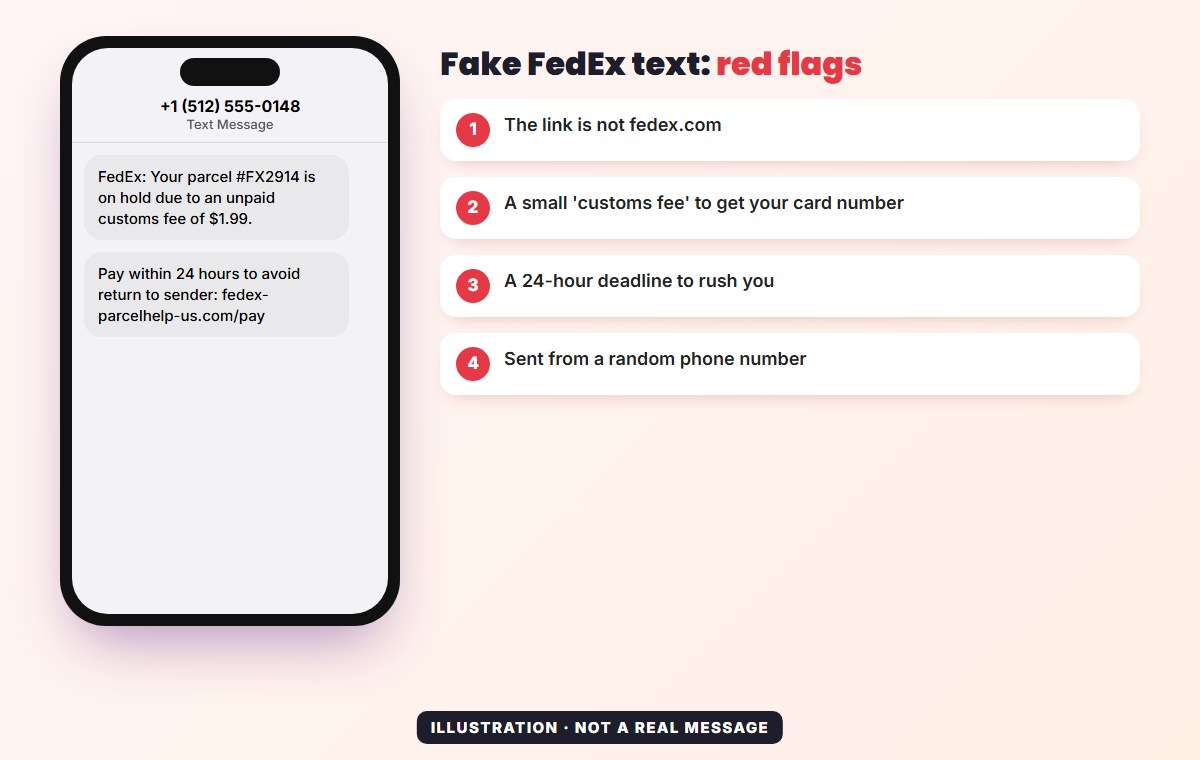
7 Red Flags of a Fake FedEx Message
- A link that is not fedex.com. Real tracking lives on fedex.com. Scam links use look-alike names, extra words like “delivery-fedex” or “fdx-clearance”, short links, or random letters.
- A fee to release the package. FedEx does not collect customs fees through random text links. Real duties are handled through FedEx’s official billing or at delivery.
- No tracking number, or one you can’t verify. If the message has a tracking number, check it yourself on fedex.com, not through the link.
- You aren’t expecting a package. Scammers send millions of texts and hope some people happen to be waiting for a delivery.
- Urgency. “Within 24 hours” or “will be returned” is pressure to make you act without checking.
- A random sender number or email address. Texts from personal-looking numbers or emails from free email services are a big warning sign.
- Requests for codes, passwords or your Social Security number. No delivery needs these.
How to Check If a FedEx Message Is Real
Don’t use any link or phone number in the message. Instead:
- Open a new browser tab and type fedex.com yourself, or open the official FedEx app.
- Enter the tracking number from the store’s order confirmation email, not from the text.
- If you have a FedEx Delivery Manager account, sign in there to see any real delivery notices.
- If you are still unsure, contact FedEx through the contact options on fedex.com.
If the package isn’t in the real FedEx system, the text was a scam.
What to Do If You Clicked the Link
Clicking alone usually doesn’t hurt you. Typing information in is what matters. Act based on what you shared:
- You only opened the page: close it. Don’t enter anything. Clear your browser history if you want to be safe.
- You entered your card: call your bank or card issuer now using the number on the back of the card. Ask them to block the card and send a new one, and check for charges you don’t recognize.
- You shared a code from your bank: tell your bank right away. That code may have approved a payment or a new device.
- You entered a password: change it on every site where you use it, and turn on two-step verification.
- You downloaded an app or file: delete it and run a security scan.
Our step-by-step guide on what to do if you got scammed walks you through getting your money back and protecting your accounts.
How to Report a FedEx Scam
Reporting helps block these messages for others:
- Forward the text to 7726 (spells “SPAM”). This free service reports it to your mobile carrier.
- Report it to FedEx through the fraud reporting page on fedex.com.
- Report it to the FTC at ReportFraud.ftc.gov, especially if you lost money.
- Delete the message and block the sender after reporting.
Other Delivery Scams to Watch For
The same trick is used with other carriers. Watch out for texts claiming to be from USPS, UPS, DHL and Amazon, plus unpaid toll texts. The red flags are the same: a link that isn’t the official website, a small fee, and urgency. If a message asks you to pay or update details through a link, check it with our free Is This a Scam? checker first.
Related guides: Black Friday Fake Store Checker and Smartphone privacy features to turn on.
FAQ
Does FedEx text you about a package?
FedEx can send delivery updates by text if you or the sender signed up for them. Real FedEx texts don’t ask you to pay a fee or enter card details through a link.
Does FedEx charge customs fees by text?
No. FedEx does not collect customs fees through links in unexpected texts. Real duties and taxes are billed through FedEx’s official channels.
What happens if I clicked a FedEx scam link?
If you didn’t enter anything, close the page and delete the message. If you entered card details, call your bank right away to block the card.
How do I know if a FedEx email is real?
Check the sender’s address carefully and don’t click links. Go to fedex.com yourself and enter your tracking number to confirm the delivery.
Where do I report a FedEx scam text?
Forward it to 7726, report it on FedEx’s fraud page and at ReportFraud.ftc.gov, then delete it.
The Bottom Line
FedEx scam texts are common, but they all share the same signs: a fake link, a small fee and pressure to hurry. Never pay or enter details through a text link. Check your package on fedex.com yourself, and report the message so fewer people fall for it.
How we checked this: red flags and reporting steps were checked against FedEx’s fraud guidance and FTC consumer advice in November 2026. Sources: FedEx: Report fraud, FTC: How to recognize and report spam text messages.