
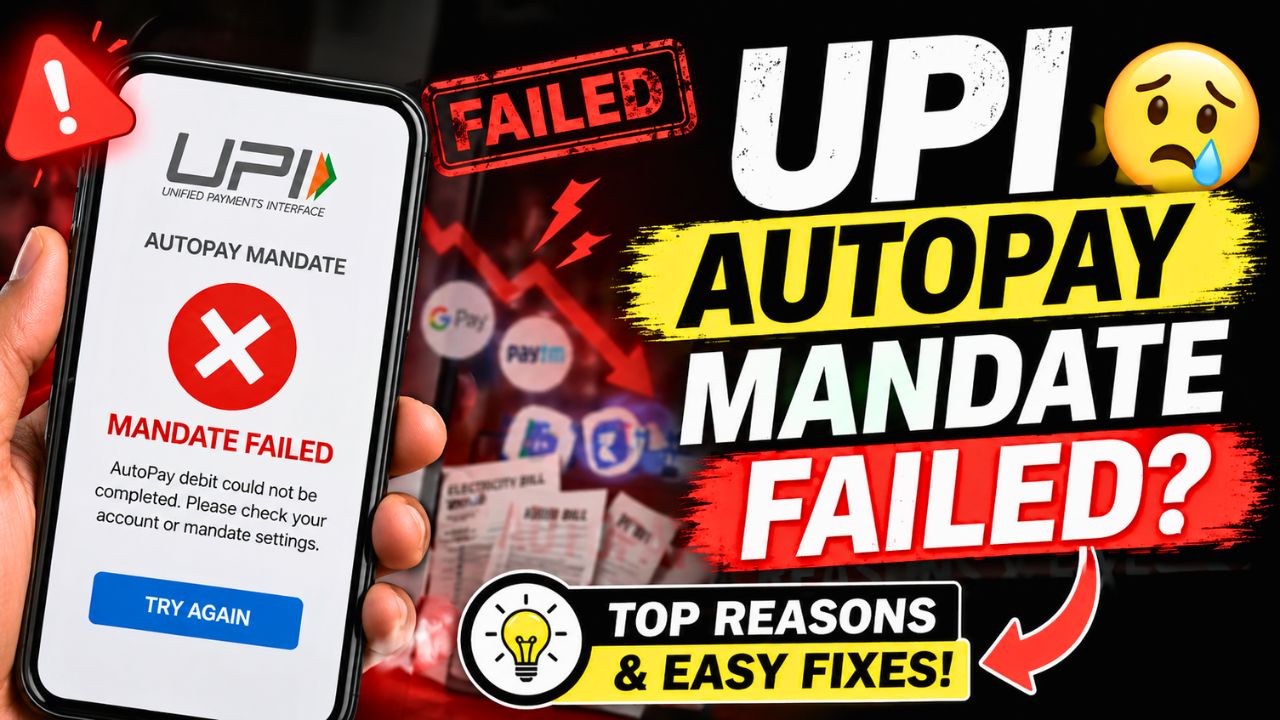
UPI Autopay is supposed to make life easier. You set a mandate once, and your payments for subscriptions, EMIs, or bills get deducted automatically without needing approval every time. But in reality, many users face a frustrating issue where the mandate simply fails, even when everything seems correct.
If you’ve ever received a notification saying your UPI Autopay failed, you’re not alone. This is a fairly common issue, and in most cases, the reason is something simple that can be fixed quickly once you understand what’s going wrong.
Why UPI Autopay mandates fail in the first place
The most important thing to understand is that UPI Autopay does not work exactly like a traditional auto-debit system. It depends on multiple factors, including your bank, app, mandate setup, and transaction timing. Even a small mismatch in any of these can cause the payment to fail.
One of the most common reasons is insufficient balance. Unlike manual payments where you can retry instantly, autopay mandates fail automatically if there isn’t enough balance at the time of deduction. Once it fails, the system may not retry immediately, depending on how the mandate was set.
Another frequent issue is mandate approval limits. UPI Autopay usually allows automatic deductions up to a certain amount without additional authentication. If your transaction exceeds that limit, the payment may require manual approval, and if that doesn’t happen on time, it gets marked as failed.
Bank server issues also play a major role. Even if your balance and mandate are correct, temporary downtime or technical issues on the bank’s side can interrupt the transaction. This is more common than people think, especially during peak hours.
Timing and validity issues that people often miss
One detail that many users overlook is the timing of the mandate. UPI Autopay works within a specific time window defined during setup. If the transaction attempt falls outside that window or if the mandate has expired, the payment will fail automatically.
Mandate validity is another factor. Some mandates are set for a fixed duration, and once that period ends, the system stops processing payments unless you renew it. This often happens silently, which is why users get confused when autopay suddenly stops working.
App-level problems that can cause failures
Sometimes the issue is not with your bank but with the app you are using. If your UPI app is outdated, has syncing issues, or hasn’t been opened for a long time, it may fail to process mandate-related requests properly.
In some cases, users change their bank account, SIM card, or device, and the mandate loses its connection with the original setup. When that happens, the system cannot authenticate the request correctly, leading to failure.
How to fix UPI Autopay mandate failures
The good thing is that most UPI Autopay failures are easy to fix once you identify the cause. The first step is to check your account balance before the scheduled deduction time. Keeping a small buffer amount can prevent unnecessary failures.
If the issue is related to mandate limits, you may need to approve the payment manually or set a higher limit while creating the mandate. This ensures that future transactions go through without interruption.
For timing or validity issues, the simplest solution is to cancel the old mandate and create a new one with updated details. This refreshes the setup and removes any hidden errors.
If you suspect bank or app-related issues, updating your UPI app and checking for any bank notifications can help. In some cases, simply reauthorizing the mandate within the app resolves the problem.
One thing most users don’t realize
A common misunderstanding is that UPI Autopay works exactly like standing instructions in banking. In reality, it is more dynamic and depends on real-time validation. This means even small changes, like a temporary server issue or a delay in authentication, can affect the outcome.
Understanding this difference helps set the right expectations. Autopay is convenient, but it is not completely fail-proof.
Final takeaway
UPI Autopay mandate failures are usually not serious problems. In most cases, they happen because of simple issues like low balance, expired mandates, or temporary technical errors. Once you know where to look, fixing them becomes straightforward.
Instead of disabling autopay completely, it makes more sense to review your setup, keep your account ready for deductions, and update mandates when needed. With the right setup, UPI Autopay can still save time and reduce the hassle of manual payments.