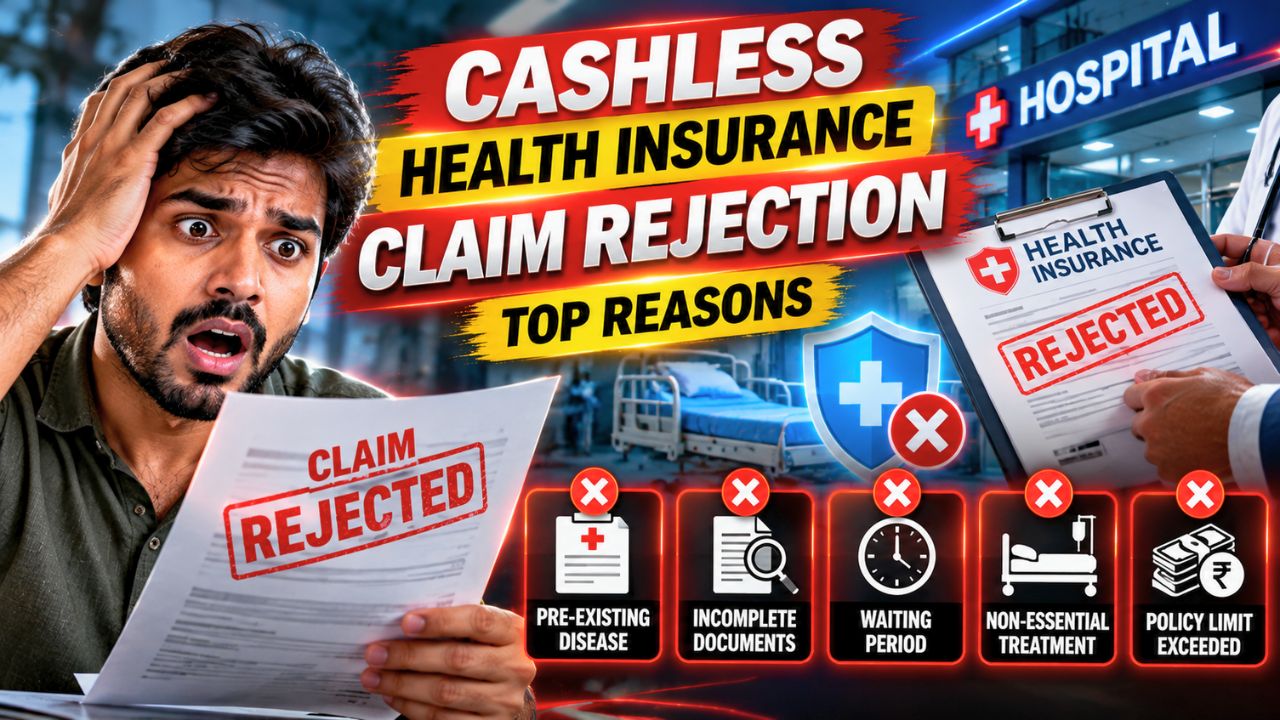
Just imagine reaching a hospital for treatment, expecting your health insurance to cover the expenses, only to discover that your cashless claim has been rejected. Suddenly, you may have to arrange money for hospital bills while dealing with a medical emergency.
This situation can be stressful, but a rejected cashless request does not always mean your entire health insurance claim is invalid. Sometimes, the issue relates to missing documents, policy conditions, hospital eligibility, or the information submitted during pre-authorization.
Understanding the reasons for cashless health insurance claim rejection can help you avoid common mistakes and know what to do if your insurer refuses approval.
In this guide, we’ll explain 10 common reasons for rejection in India, how to respond, and the steps you can take to challenge a decision you believe is incorrect.
What Is a Cashless Health Insurance Claim?
A cashless health insurance claim allows an insurer to pay eligible treatment expenses directly to a hospital in its network, subject to the policy’s terms and the amount approved.
The hospital generally sends a pre-authorization request to the insurer or its Third-Party Administrator (TPA). The insurer reviews the request and decides whether to approve the cashless facility.
However, cashless approval is not the same as a guarantee that every hospital expense will be covered. Some costs may remain payable by the patient because of policy exclusions, co-payments, deductibles, room-rent limits, or other applicable conditions.
The Insurance Regulatory and Development Authority of India (IRDAI) explains the cashless facility and policyholder protections in its official health insurance FAQs.
10 Reasons for Cashless Health Insurance Claim Rejection
1. The Treatment Is Not Covered Under Your Policy
One of the most common reasons for a claim dispute is that the treatment or expense falls outside the coverage provided by the policy.
Health insurance plans differ in their benefits, exclusions, and limits. A policy may cover hospitalisation but exclude certain procedures or expenses unless specific conditions are met.
For example, your policy might not cover a particular elective procedure, or a specific treatment may be covered only under an optional benefit you haven’t purchased.
How to avoid it: Read the policy wording and Customer Information Sheet before treatment whenever possible. Ask your insurer whether the planned procedure is covered and whether any special conditions apply.
2. The Waiting Period Has Not Been Completed
Many health insurance policies impose waiting periods for certain conditions and treatments. During the applicable waiting period, the insurer may not cover treatment related to those conditions.
Depending on the policy, waiting periods may apply to specified diseases, pre-existing diseases, or particular procedures.
For example, if your policy excludes coverage for a particular condition until its waiting period ends, a hospitalisation for that condition during the waiting period may not be payable.
How to avoid it: Check the waiting periods stated in your policy, including any changes made through portability, migration, or policy endorsements. Don’t assume every illness is covered immediately after purchasing insurance.
3. Incorrect or Incomplete Information in the Application
When purchasing health insurance, applicants are expected to provide accurate information about their medical history and other details requested by the insurer.
Problems can arise if important information is missing, incorrect, or inconsistent with the records submitted during a claim.
For instance, a medical condition disclosed during hospitalisation may differ from the details recorded in the original proposal form.
However, an inconsistency does not automatically mean the insurer can reject every claim. The insurer must assess the facts and applicable policy and regulatory provisions.
How to avoid it: Disclose relevant medical history honestly when purchasing the policy. Keep a copy of your proposal form and correct any errors through the insurer’s official process.
4. Pre-Existing Disease or Medical History Dispute
A pre-existing disease may be subject to specific policy terms and waiting periods. A claim can be disputed if the insurer believes the treatment relates to a condition that was not disclosed or is not yet covered.
For example, if a policyholder receives treatment for a long-standing medical condition, the insurer may review the medical records and original application before deciding whether the claim is payable.
The outcome depends on the facts, the policy wording, the disclosures made, and applicable regulations. A pre-existing condition alone does not automatically make a claim invalid.
How to avoid it: Disclose known medical conditions when applying for insurance and retain records of your disclosures. If the insurer rejects a claim on this ground, ask for the exact policy clause and the evidence supporting its decision.
5. The Hospital Is Not Eligible for Cashless Treatment
Cashless treatment is generally available through hospitals that participate in the insurer’s network or an applicable cashless arrangement.
If the hospital is not eligible for cashless treatment under your policy, the insurer may not approve direct payment through the cashless process.
However, cashless facility rejection does not necessarily mean reimbursement is impossible. Depending on your policy and the hospital’s eligibility, you may be able to pay the bill and submit a reimbursement claim.
How to avoid it: Check the insurer’s current hospital network before planned admission. In an emergency, contact the insurer or TPA as soon as practical to understand the available options.
6. Missing Documents or Incomplete Medical Records
The insurer may need medical reports and supporting documents to assess the proposed treatment.
Common examples include:
- Doctor’s consultation notes.
- Investigation and diagnostic reports.
- Admission advice and treatment plans.
- Previous medical records, where relevant.
- Hospital estimates and pre-authorization forms.
If essential information is missing, the insurer may request clarification or additional records. Depending on the circumstances, this can delay or affect approval.
How to avoid it: Ask the hospital’s insurance desk to verify that the pre-authorization request includes the required information. Respond promptly to reasonable requests for additional documents.
7. The Insurer Questions the Medical Necessity of Hospitalisation
An insurer may review whether hospitalisation or a proposed procedure is medically necessary under the policy’s terms.
For example, a dispute may arise if the submitted records do not adequately explain why inpatient treatment was required or why a particular procedure was recommended.
A disagreement over medical necessity should be assessed using the patient’s medical records, the treating doctor’s explanation, and the applicable policy conditions.
How to avoid it: Ensure that the treating doctor provides clear clinical notes explaining the diagnosis, symptoms, recommended treatment, and reason for hospitalisation.
If the request is questioned, ask the hospital to submit the relevant medical justification and supporting reports.
8. The Sum Insured Has Been Exhausted or a Policy Limit Applies
Even when a treatment is covered, the insurer may not pay the entire bill if the available coverage is insufficient or a policy limit applies.
For example, a health insurance policy may include:
- A remaining sum insured that is lower than the estimated hospital bill.
- A room-rent or room-category limit.
- A disease-specific sub-limit.
- A deductible or co-payment.
- Non-payable expenses under the policy.
These restrictions can result in partial approval, leaving some expenses for the patient to pay. A limit affecting part of a claim does not necessarily justify rejecting the entire claim.
How to avoid it: Check your available sum insured, sub-limits, deductibles, co-payment provisions, and room eligibility before planned hospitalisation.
9. The Policy Has Lapsed or Coverage Is Not Active
Health insurance generally requires the policy to remain in force, subject to its terms and applicable grace-period provisions.
If a policy has lapsed or coverage is otherwise inactive, a claim may be disputed or denied. Premium payment issues can be particularly important when a renewal is overdue.
The precise effect depends on the policy, payment history, grace-period rules, and the dates of treatment.
How to avoid it: Renew your policy on time, retain premium receipts, and verify your policy status with the insurer if there is any uncertainty.
Do not assume that every grace period provides uninterrupted coverage for treatment during a period when the required premium has not been received.
10. Incorrect Details or Differences Between the Pre-Authorization Request and Actual Treatment
The insurer may need clarification if the information submitted before admission differs from the final treatment records or hospital bill.
For example, the diagnosis, proposed procedure, length of stay, or estimated expenses may change during treatment.
Such differences do not automatically mean the claim is invalid. The insurer may need updated information to determine which expenses are covered.
How to avoid it: Ask the hospital to submit accurate information and notify the insurer when a significant change in treatment or estimated expenses occurs. Keep copies of the pre-authorization request and any revised approval.
What to Do If Your Cashless Health Insurance Claim Is Rejected
If your cashless request is rejected, don’t assume you have no options. Follow these steps to understand the decision and protect your ability to claim eligible expenses.
Step 1: Ask for the Exact Reason in Writing
Request a written rejection or denial communication from the insurer. It should identify the reason for the decision and the relevant policy condition.
Avoid relying only on a verbal explanation from the hospital insurance desk or TPA.
Step 2: Check the Policy Wording
Read the policy clause cited in the rejection letter. Check whether it applies to your treatment and circumstances.
If the reason is unclear, ask the insurer to explain how the clause applies to the submitted medical records.
Step 3: Ask Whether Missing Information Can Be Submitted
If the issue relates to incomplete documents or unclear medical information, ask whether the insurer will reconsider the request after receiving the required details.
The hospital’s insurance desk and treating doctor may be able to provide additional records or clarification.
Step 4: Ask About Reimbursement
If cashless treatment remains unavailable, ask your insurer whether you can submit a reimbursement claim under your policy.
Keep the original bills, payment receipts, discharge summary, prescriptions, investigation reports, and other required records. Follow the insurer’s claim-submission instructions and deadlines.
Reimbursement is subject to the policy terms; it is not guaranteed simply because the cashless request was rejected.
Step 5: Raise a Formal Complaint if Necessary
If you believe the decision is incorrect, submit a complaint through your insurer’s official grievance redressal channel. Include your policy number, claim reference, rejection letter, relevant medical records, and a clear explanation of why you believe the decision should be reviewed.
If the insurer does not resolve the complaint satisfactorily, you can consider escalating it through IRDAI’s grievance mechanism or the Insurance Ombudsman, subject to the applicable eligibility and procedure.
Keep copies of all correspondence and acknowledgement numbers.
Is a Cashless Claim Rejection Final?
Not always. A rejection of the cashless request may relate to missing information, an eligibility issue, or a policy exclusion. The next steps depend on the specific reason.
For example, if approval was withheld because a medical report was missing, submitting that report may help the insurer reassess the request. If the insurer has rejected the claim because a treatment is excluded, the outcome will depend on the policy wording and whether that exclusion applies.
You should also distinguish between a cashless facility denial and a final claim repudiation. The first concerns direct settlement with the hospital; the second is a decision not to pay the claim under the policy. Ask the insurer to clarify which decision it has made and what review options are available.
How to Reduce the Risk of Cashless Claim Rejection
You can take a few practical steps before and during hospitalisation:
- Read your policy exclusions and waiting periods.
- Disclose relevant medical history accurately.
- Verify hospital network eligibility.
- Ask the hospital to submit complete pre-authorization details.
- Keep your policy active and premiums up to date.
- Confirm room limits, co-payments, deductibles, and sub-limits.
- Keep copies of medical reports, bills, and insurer communications.
- Request written clarification if the insurer raises an objection.
Frequently Asked Questions
1. Can a cashless health insurance claim be rejected even at a network hospital?
Yes. Being a network hospital does not guarantee approval for every treatment or expense. The claim must still satisfy the policy’s coverage conditions and applicable requirements.
2. Can I claim reimbursement after cashless approval is rejected?
Possibly. Reimbursement may be available if the treatment and expenses are covered under your policy and the applicable requirements are met. Confirm the process and required documents with your insurer.
3. Can an insurer reject a claim because of a pre-existing disease?
A claim may be denied if an applicable waiting period or policy condition excludes the treatment, or if there is a valid dispute concerning disclosure. The insurer must assess the actual circumstances and applicable rules; a pre-existing disease does not automatically invalidate a claim.
4. What should I do if the insurer gives no clear reason for rejection?
Ask for a written decision that identifies the specific reason and relevant policy condition. If the response remains unsatisfactory, raise a formal grievance through the insurer and consider the available escalation channels.
5. Does cashless approval mean the entire hospital bill will be paid?
No. The insurer may approve only eligible expenses up to the applicable coverage limits. Co-payments, deductibles, sub-limits, exclusions, and other non-payable expenses may remain your responsibility.
Final Takeaway
Cashless health insurance claim rejection can happen for several reasons, including waiting periods, policy exclusions, incomplete documents, hospital eligibility issues, medical necessity disputes, and coverage limits.
The most important step is to get the exact reason in writing before deciding what to do next. Check the relevant policy clause, provide any missing information, and ask whether reimbursement or a formal review is available.
If you believe the insurer has applied the policy incorrectly, use its grievance process and keep a record of all communications. Knowing your policy terms before hospitalisation can help reduce surprises when you need insurance the most.