
Life doesn’t always go according to plan. A sudden medical emergency, unexpected job loss, urgent home repairs, or a major car breakdown can put significant pressure on your finances when you least expect it. These situations often force families to borrow money or depend on credit cards, making an already stressful situation even more difficult.
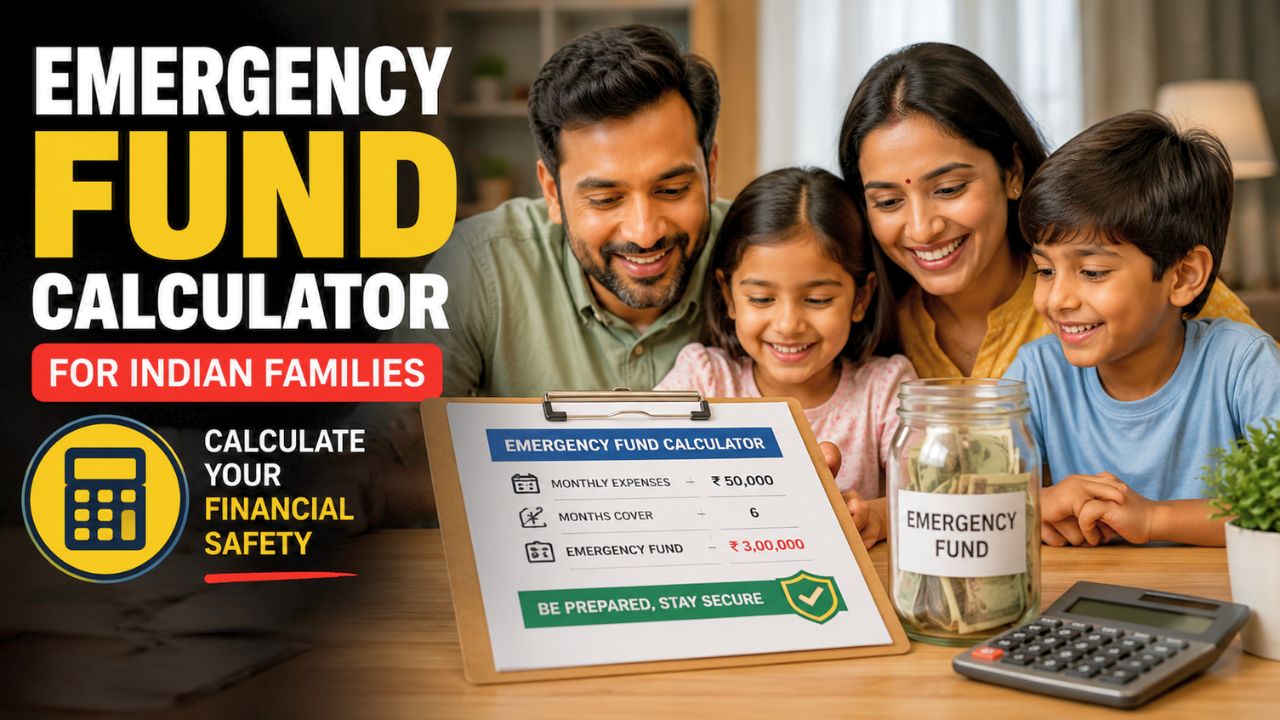
That’s exactly why every household should build an emergency fund before thinking about expensive investments or luxury purchases. An Emergency Fund Calculator For Indian Families is one of the simplest tools that helps you estimate how much money your family should keep aside for unexpected situations. Instead of making random guesses, it gives you a realistic savings target based on your monthly expenses and financial responsibilities.
What Is an Emergency Fund Calculator?
An Emergency Fund Calculator is a planning tool that estimates the amount of money your family should save to handle financial emergencies without taking loans. It usually works by calculating your essential monthly expenses and multiplying them by the number of months you want financial protection for.
For example, if your family’s essential monthly expenses are ₹40,000 and you want to build a six-month emergency fund, your target savings would be around ₹2.4 lakh.
Simple Formula
Emergency Fund = Monthly Essential Expenses × Number of Months
Although the formula is simple, having a clear savings target makes it easier to stay disciplined and track your progress.
Which Expenses Should You Include?
One common mistake people make is adding every monthly expense, including luxury spending. An emergency fund is meant to cover necessities, not lifestyle upgrades.
Your calculation should include:
- House rent or home loan EMI
- Groceries and daily essentials
- Electricity, gas and water bills
- Children’s education expenses
- Medical costs and insurance premiums
- Transportation expenses
- Internet and mobile bills
- Basic family needs
Avoid including shopping, vacations, entertainment, or other optional expenses unless they are absolutely necessary.
How Much Emergency Fund Does an Indian Family Need?
There isn’t a single amount that works for everyone because every family’s financial situation is different. However, most financial planners recommend saving enough to cover three to six months of essential expenses. Families with a single earning member, self-employed professionals, or people working in industries with uncertain income may prefer keeping nine to twelve months of expenses for additional security.
For example:
| Monthly Essential Expenses | Recommended Emergency Fund |
|---|---|
| ₹25,000 | ₹75,000 – ₹1.5 Lakh |
| ₹40,000 | ₹1.2 – ₹2.4 Lakh |
| ₹60,000 | ₹1.8 – ₹3.6 Lakh |
| ₹80,000 | ₹2.4 – ₹4.8 Lakh |
These figures are only estimates. Your ideal emergency fund depends on your income stability, family size, existing insurance coverage, and financial commitments.
Where Should You Keep Your Emergency Fund?
An emergency fund should be easy to access whenever you need it. At the same time, it shouldn’t be so easily available that you’re tempted to spend it on unnecessary purchases.
Many families prefer keeping their emergency savings in:
- High-interest savings accounts
- Liquid mutual funds
- Sweep-in fixed deposits
- Short-term bank deposits
The primary goal is liquidity and safety rather than high returns.
Final Thoughts
An emergency fund isn’t about expecting bad things to happen. It’s about being financially prepared if they do. An Emergency Fund Calculator For Indian Families gives you a practical savings target instead of relying on guesswork, helping you build financial confidence one month at a time.
The most important step isn’t saving a huge amount overnight. It’s starting today, even if you can only set aside a small amount every month. Over time, those consistent contributions can become the financial cushion that protects your family during life’s unexpected moments.
Frequently Asked Questions
How much emergency fund should an Indian family have?
Most families should aim to save three to six months of essential living expenses, although households with unstable income may prefer a larger emergency fund.
Can I keep my emergency fund in a fixed deposit?
Yes. Many people use sweep-in or short-term fixed deposits because they offer easy access while earning better returns than a regular savings account.
Should I invest my emergency fund in stocks?
Generally, no. Since emergencies can happen at any time, the money should remain in low-risk and easily accessible options rather than volatile investments.
How often should I update my emergency fund calculation?
Review your emergency fund at least once a year or whenever your income, monthly expenses, or family responsibilities change significantly.