
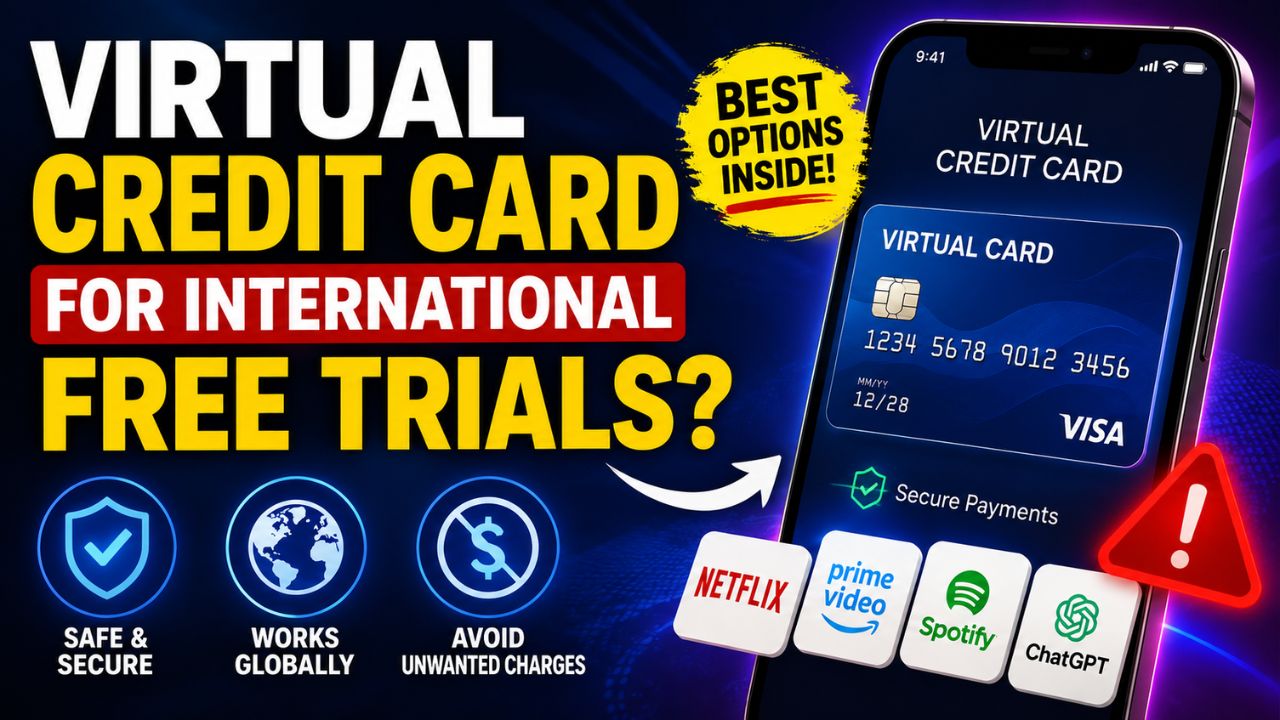
A lot of people sign up for international free trials thinking they will cancel before the billing date, but that rarely goes as planned.
One forgotten subscription is enough to trigger an unexpected charge, and by the time you notice it, the money is already gone.
That is exactly why virtual credit cards have started becoming popular, especially among users who frequently try international apps, AI tools, streaming platforms, or premium software trials.
Instead of using your main bank card everywhere, a virtual card gives you a temporary or controlled payment method that keeps your real card details hidden.
What is a virtual credit card
A virtual credit card is basically a digital version of a payment card that works online without exposing your actual banking information. It usually comes with:
- Temporary card number
- Separate CVV and expiry details
- Spending limits or controls
- Easy freeze or delete options
Some virtual cards are linked to your existing bank account, while others work independently through fintech apps or prepaid systems.
Why people use virtual cards for free trials
International free trials are convenient, but they often come with auto-renewal systems. Many services quietly charge users once the trial ends, and cancelling subscriptions is not always straightforward.
This is where virtual cards become useful.
Instead of risking your primary credit card, users create a separate virtual card with limited balance or spending control. Even if the service attempts to charge unexpectedly, the risk remains lower compared to exposing your main card details.
This approach has become especially common for:
- AI tools and premium apps
- Streaming subscriptions
- Cloud storage services
- International software trials
One of the biggest advantages is privacy
Most users focus only on avoiding unwanted charges, but privacy is another major reason why virtual cards are growing in popularity.
Every time you enter your primary card details on a new platform, you increase exposure to potential misuse, data leaks, or unauthorized charges. A virtual card adds an extra layer of separation between your real banking information and online services.
That additional control becomes important when signing up for websites or services you are not fully familiar with.
Some services even allow single-use cards
Certain fintech platforms now offer disposable virtual cards designed for one-time usage. Once the transaction is completed, the card becomes inactive automatically.
This is particularly useful for:
- Trial subscriptions
- International signups
- Unknown merchants
- Temporary purchases
Instead of remembering to cancel a card later, the system handles it automatically.
Popular options users often look at
Depending on your country and payment support, users commonly explore options like:
- Wise virtual cards
- Revolut virtual cards
- Privacy-focused payment apps
- Bank-issued digital cards
Availability varies by region, and some services may require identity verification before activation.
Important things users should know before using one
While virtual cards are useful, there are still a few things to keep in mind.
Some international services can detect prepaid or disposable cards and may reject them during signup. In other cases, refunds can take longer depending on the provider.
It is also important to understand that virtual cards are not meant for bypassing payment systems or violating platform policies. Their main purpose is security, spending control, and privacy.
Why this trend is growing in 2026
As more digital services move toward subscription models, users are becoming more cautious about recurring payments. At the same time, AI platforms, productivity tools, and premium apps are offering more international trials than ever before.
That combination is pushing more people toward safer payment methods that offer flexibility without exposing their primary financial information repeatedly.
Quick Comparison
| Feature | Virtual Credit Card | Regular Credit Card |
|---|---|---|
| Real card details exposed | No | Yes |
| Temporary card support | Yes | No |
| Spending control | Better | Limited |
| Good for free trials | Yes | Riskier |
| Easy to disable | Usually yes | Not always |
Final takeaway
Using a virtual credit card for international free trials is less about avoiding payments and more about maintaining control. Whether it is protecting your main banking details, limiting unwanted charges, or managing subscriptions more safely, virtual cards provide a practical layer of security for modern online usage.
As digital subscriptions continue to grow, tools like these are becoming less of a niche feature and more of a smart habit for regular internet users.







![How to reduce battery drain after [AndroidiOS version] update](https://unifite.in/wp-content/uploads/2026/10/How-to-reduce-battery-drain-after-AndroidiOS-version-update-100x70.jpg "How to Reduce Battery Drain After an Android or iOS Update (2026)")