
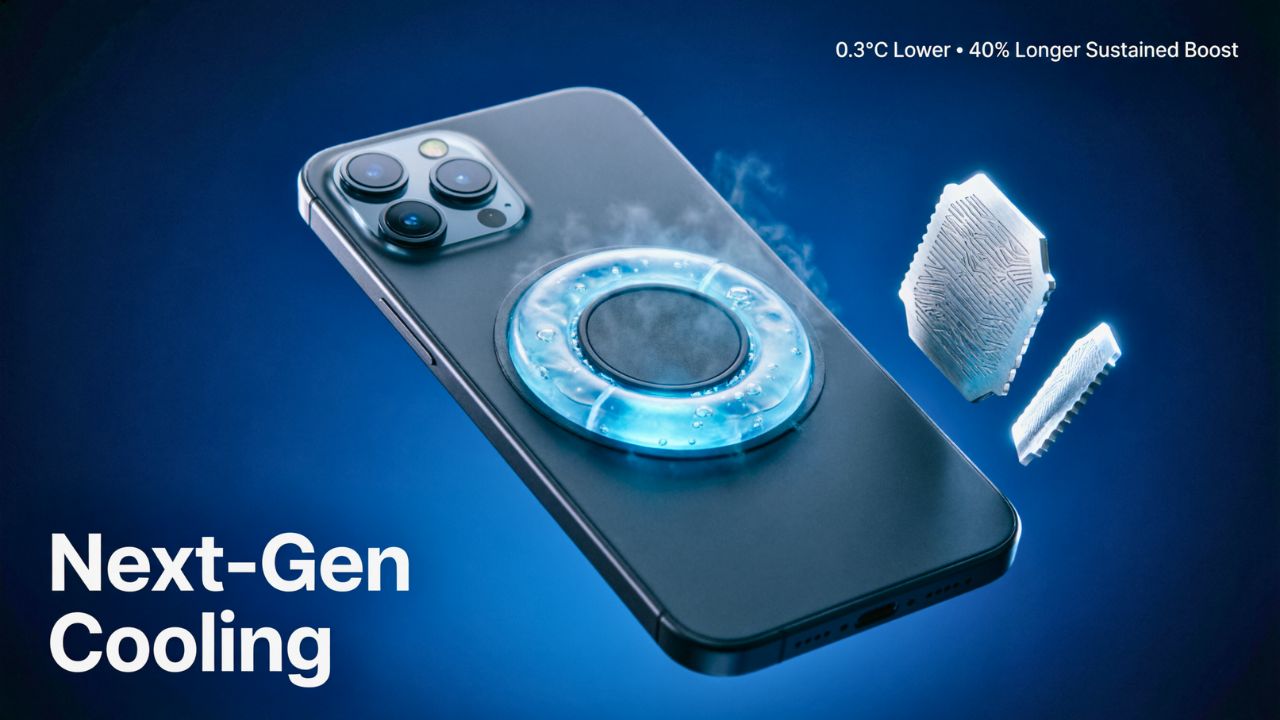
Modern smartphones have become incredibly powerful. Flagship processors can now edit 4K videos, run console-quality games, and perform AI tasks that were once limited to laptops. While this extra power improves performance, it also creates one unavoidable problem: heat.
If you’ve ever noticed your phone becoming warm during gaming, video recording, or fast charging, you’re not alone. Heat is one of the biggest challenges smartphone manufacturers face today.
A processor that gets too hot starts reducing its performance automatically, a process known as thermal throttling. That means lower frame rates, slower app performance, and sometimes even reduced battery life.
This is why smartphone cooling technology has become more important than ever in 2026. Instead of relying on a single cooling solution, manufacturers are combining multiple technologies to keep temperatures under control while maintaining high performance.
Understanding how these systems work can help you choose a phone that performs consistently instead of one that looks powerful only on paper.
Why Smartphone Cooling Matters More in 2026
Every new mobile chipset brings higher CPU and GPU performance, but it also generates more heat during demanding tasks. Gaming, AI-powered photo editing, extended camera recording, and multitasking can quickly increase internal temperatures if the device cannot dissipate heat efficiently.
A well-designed cooling system doesn’t simply keep the phone comfortable to hold. It allows the processor to maintain peak performance for longer periods without reducing clock speeds. That’s why two smartphones using the same processor can perform very differently depending on their thermal management. Recent flagship and even mid-range phones increasingly use larger vapor chambers, graphene layers, and improved thermal materials to sustain performance.
Vapor Chamber Cooling: The Current Industry Standard
Among all smartphone cooling technologies, vapor chamber cooling has become the preferred choice for many flagship devices.
A vapor chamber is essentially a flat heat pipe containing a small amount of liquid. When the processor generates heat, the liquid inside evaporates and spreads the heat evenly across the chamber before condensing and repeating the cycle. This allows heat to move quickly away from the chipset instead of remaining concentrated in one small area.
Advantages
- Excellent heat distribution
- Better sustained gaming performance
- Reduces thermal throttling
- Suitable for slim smartphone designs
Many flagship phones now use larger vapor chambers than previous generations because increasing the cooling surface helps maintain stable performance during heavy workloads.
Graphene Cooling: Thin, Light and Highly Efficient
Graphene has become another important material in smartphone cooling.
Unlike vapor chambers that move heat using liquid, graphene acts as an excellent heat spreader. Thin graphene sheets distribute heat across a larger portion of the phone’s internal frame, preventing hot spots from developing. Manufacturers often combine graphene with vapor chambers rather than using it alone because the two technologies complement each other.
This combination allows phones to remain relatively thin while improving thermal performance during daily use.
Heat Pipe Cooling: Still Useful but Less Advanced
Before vapor chambers became common, many smartphones relied on traditional heat pipes.
Heat pipes use a similar principle but transfer heat through a narrow tube instead of a flat chamber. They remain effective and are still found in many mid-range devices, but they cannot spread heat as evenly as modern vapor chambers.
For everyday tasks like browsing, streaming, and social media, heat pipes work well. However, for prolonged gaming or intensive workloads, vapor chamber systems usually perform better.
Active Cooling: Designed for Serious Mobile Gaming
Gaming smartphones have introduced another approach known as active cooling.
Instead of relying entirely on passive heat dissipation, some gaming phones include small internal fans or support external cooling accessories that actively move air across internal components. This allows the processor to maintain higher clock speeds for longer gaming sessions. Phones such as RedMagic have continued to refine active cooling systems alongside large vapor chambers.
The downside is that active cooling adds complexity and is generally limited to gaming-focused devices rather than mainstream smartphones.
Quick Comparison
| Cooling Technology | Best For | Performance | Common in 2026 |
|---|---|---|---|
| Vapor Chamber | Flagship phones | ⭐⭐⭐⭐⭐ | Very Common |
| Graphene Layers | Flagship & Mid-range | ⭐⭐⭐⭐☆ | Common |
| Heat Pipe | Mid-range devices | ⭐⭐⭐☆☆ | Moderate |
| Active Cooling Fan | Gaming phones | ⭐⭐⭐⭐⭐ | Limited |
| Hybrid Cooling (VC + Graphene) | Premium flagships | ⭐⭐⭐⭐⭐ | Growing |
Which Cooling Technology Is Best?
If you’re buying a phone mainly for everyday use, you don’t need an active cooling fan. A smartphone with a well-designed vapor chamber and graphene layers will usually provide excellent thermal performance while keeping the device slim and quiet.
However, if you spend hours playing demanding games or recording long 4K videos, gaming phones with hybrid or active cooling systems can maintain higher performance for longer periods.
The important point is that cooling should never be judged by marketing terms alone. A larger vapor chamber, efficient chipset, and good software optimization often matter more than flashy cooling names.
Final Thoughts
The biggest trend in smartphone cooling technology in 2026 is not the arrival of one revolutionary solution but the combination of multiple technologies working together. Manufacturers are increasingly pairing vapor chambers, graphene heat spreaders, and smarter thermal designs to deliver consistent performance without making phones thicker or heavier.
When choosing your next smartphone, don’t focus only on the processor or camera. A powerful chipset can only perform at its best if the cooling system is capable of handling the heat it generates. In many cases, better thermal management is what separates a phone that stays fast after 30 minutes of gaming from one that slows down after just a few minutes.