
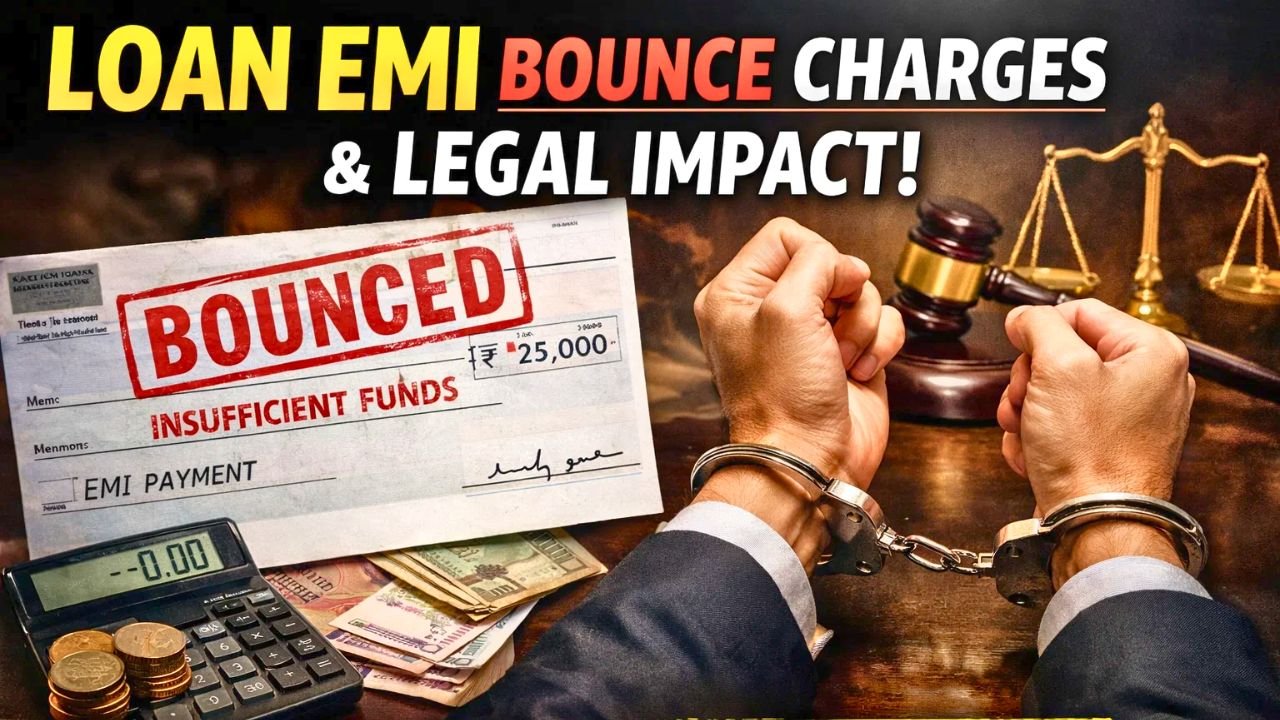
Missing a loan EMI once might not feel like a big issue. Many people assume they can adjust it next month and move on. But when an EMI bounces, it sets off a chain reaction that most borrowers underestimate. The lender does not just retry the payment silently. A penalty is added, late interest begins applying, and if the delay stretches beyond a few days, it may start reflecting in your repayment record.
If you are already managing more than one loan, it becomes even more important to understand this properly. I have seen many borrowers struggle not because they lacked income, but because they lacked structure. This article will explain the practical side of Loan EMI Bounce Charges and Legal Impact without exaggeration and without fear tactics.
Disclaimer: This article is for educational awareness only and not legal advice.
What Exactly Is an EMI Bounce?
An EMI bounce happens when your lender tries to deduct the monthly installment and the transaction fails. In most cases, this is due to insufficient balance in the bank account linked for auto-debit. It can also happen because of technical issues, mandate problems, or account restrictions.
From the lender’s system perspective, the EMI is unpaid until the amount is successfully credited. The moment deduction fails, a bounce entry is recorded. That entry can trigger penalty charges automatically.
How Much Do Banks Charge for EMI Bounce?
Bounce charges are not uniform across lenders, but most personal loan and car loan bounce fees range between ₹400 and ₹750 plus GST. In home loans, charges can sometimes go slightly higher.
Here is a realistic range:
| Loan Type | Approximate Bounce Charges |
|---|---|
| Personal Loan | ₹400 – ₹750 + GST |
| Car Loan | ₹350 – ₹700 + GST |
| Home Loan | ₹500 – ₹1,000 + GST |
| Credit Card EMI | ₹500+ + late payment fee |
Apart from the fixed penalty, lenders also charge penal interest on the overdue amount until it is cleared. This means the longer you delay correction, the higher your total repayment becomes.
RBI requires lenders to disclose penalty structures clearly in the loan agreement. You can review borrower awareness guidelines on the official RBI website to understand your rights as a borrower.
Does One EMI Bounce Affect Credit Score?
This is one of the most common concerns.
If you correct the bounced EMI quickly, usually within a few days, the impact on your credit score may be limited. However, if the delay crosses 30 days and gets reported to credit bureaus like CIBIL, it starts affecting your credit profile.
Repeated EMI bounce incidents are more damaging than a single delayed payment. Lenders evaluate consistency. If your repayment history shows frequent delays, it reduces confidence.
What Happens If EMI Bounce Happens Repeatedly?
This is where things become serious.
When EMIs remain unpaid for longer periods, lenders categorize accounts based on overdue duration. Once delay crosses certain thresholds, the loan may move into higher risk categories. After 90 days of non-payment, loans can be classified as Non-Performing Assets under RBI norms.
At that stage, the lender may initiate recovery procedures. In unsecured loans like personal loans, it usually begins with reminder calls and formal notices. In secured loans such as car loans or home loans, repossession or legal recovery steps may follow after due notice.
Legal action does not happen overnight. It happens after continued non-payment and lack of communication. Borrowers who communicate early and request restructuring are often treated differently from those who ignore calls.
Why EMI Bounce Usually Happens
In most cases, EMI bounce is not about irresponsibility. It is about poor cash flow planning.
Common reasons include:
- Not maintaining buffer balance
- Multiple loans with scattered due dates
- Overuse of credit cards
- Salary credit delays
- No emergency savings
If you are handling multiple EMIs, you should build a structured repayment system. We have covered that in detail in how to manage multiple loans without default.
What Should You Do If Your EMI Bounces?
The worst reaction is ignoring it.
If your EMI bounces:
- Deposit the required amount immediately.
- Inform the lender and request reprocessing.
- Clear bounce charges quickly.
- Monitor your account statement.
Speed matters. The faster you correct the delay, the lower the long-term impact.
How to Prevent EMI Bounce in the Future
Maintain at least one EMI amount as buffer in your account. Align EMI dates close to your salary credit date. If possible, use a separate bank account only for EMI payments. Transfer the total installment amount there immediately after salary is credited.
Building even a small emergency fund reduces the chances of sudden shortfall. If you are working on improving financial stability, you may also want to read our article on finance mistakes that reduce savings every month. Many bounce cases start with small saving habits going wrong.
Frequently Asked Questions
Is EMI bounce a criminal offence?
No. EMI bounce itself is not a criminal offence. However, repeated non-payment can lead to civil recovery action.
Can one EMI bounce reduce my credit score?
If corrected quickly, the impact may be minimal. Repeated delays are more harmful.
Can banks seize assets after EMI bounce?
In secured loans like car or home loans, repeated and prolonged non-payment can lead to repossession after proper legal process.
How many EMI bounces are safe?
There is no “safe” number. Even a few repeated delays can create a negative repayment pattern.
Final Thoughts
Loan EMI bounce charges are not just small penalties. They are early warning signs that something in your repayment planning needs correction.
One delayed EMI is manageable. A pattern of delayed EMIs becomes expensive. Stay proactive. Maintain buffer. Communicate early. Keep your repayment record clean. Financial credibility builds slowly and can weaken quickly. Protect it carefully.