
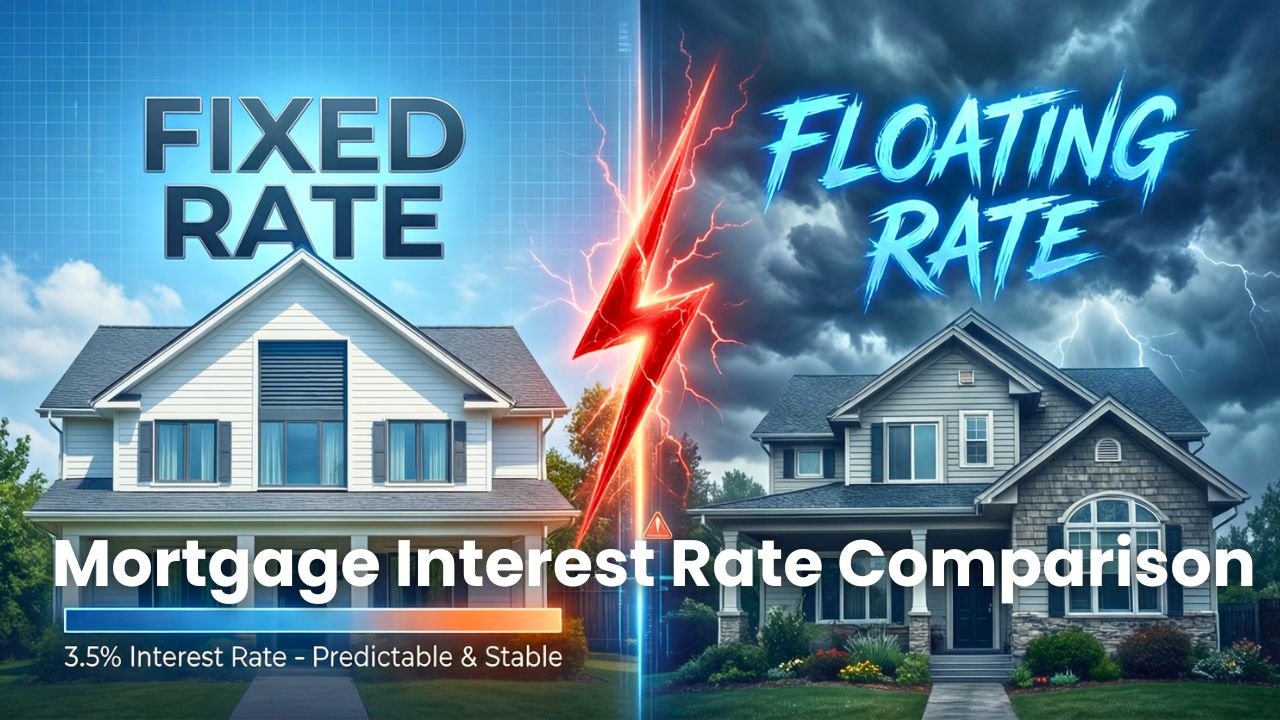
Dreaming of buying a house? It’s time to take out a home loan, but the biggest confusion is should you go for a fixed interest rate or a floating interest rate?
In January 2026, rates are quite low, starting around 7.10%, but they can change. Let’s understand in simple terms what the difference is between the two, what the pros and cons are, and which one will be best for you.
What is a Fixed Rate?
In a fixed rate loan, the interest rate remains the same for the entire loan tenure. This means your EMI will be the same every month, regardless of what happens in the market.
No tension about the rate increasing and your EMI jumping. However, fixed rates are usually slightly higher than floating rates, like 1-2% extra.
What is a Floating Rate?
In a floating rate loan, the rate fluctuates with the market. If the RBI repo rate changes, your rate can also change. If the rate falls, your EMI might decrease or your loan might be paid off sooner. But if it increases, your EMI or tenure will increase. Currently, rates are low, so a floating rate might be advantageous.
What’s the Current Situation (January 2026)?
Currently, home loan rates start from 7.10% (for example, at Bank of India). Floating rates are more popular because the RBI has banned prepayment charges on floating rate loans. Fixed rates are slightly higher, but purely fixed rates are rare. Most are hybrid loans that are fixed for a period and then become floating.
| Feature | Fixed Rate | Floating Rate |
|---|---|---|
| Interest Rate | Always the same | Changes with the market |
| EMI | Fixed, no change | Can change (up or down) |
| Prepayment Charge | May apply | Mostly none (as per RBI rules) |
| Risk | Low (no surprises) | High (rate can increase) |
| Benefit if rates fall | None | EMI reduces or loan ends sooner |
| Current Rate (2026) | Around 8-9% | Starts from 7.10-8% |
Pros and Cons
Fixed Rate Pros
- EMI is fixed, easy to budget.
- No fear of rate increases.
- Ideal for long-term planning.
Fixed Rate Cons
- Rate is slightly higher.
- No benefit if market rates fall.
- Prepayment charges may apply.
Floating Rate Pros
- Starting rate is low.
- Savings if rates fall.
- Prepayment is free (no charges).
- Can be cheaper in the long run.
Floating Rate Cons
- EMI increases if rates rise.
- Uncertainty in budgeting.
- Higher risk in the short term.
Conclusion
Currently in 2026, rates are low and the economy seems stable, so many people are choosing floating rates. You might benefit if rates fall further. But if you need a fixed budget and are worried about rate increases, go for a fixed rate.
Also check out the hybrid option that starts with a fixed rate and later switches to floating. Decide based on your income, risk tolerance, and future plans. Talk to your bank, compare offers, and choose what suits you.