
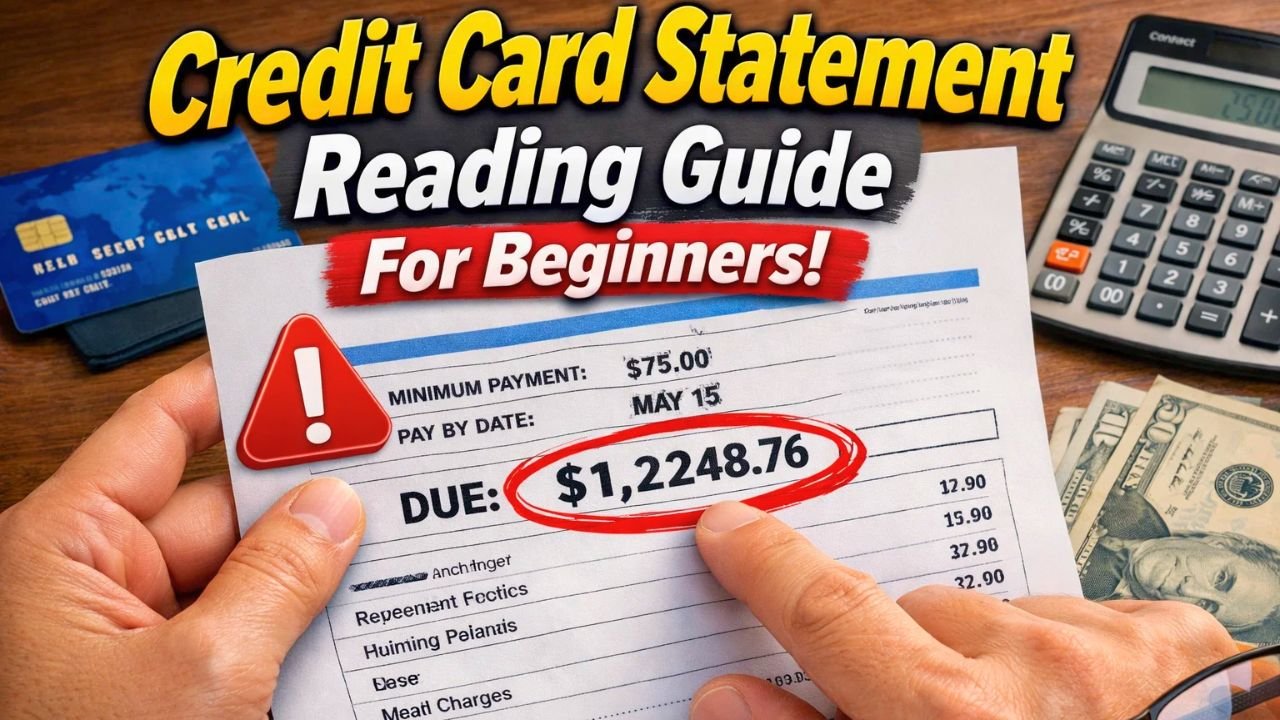
A credit card statement looks confusing at first. Numbers everywhere, dates, charges, minimum due, total due, credits, debits… and most beginners just scroll down, check the total amount, and pay something. That’s it. But this habit is exactly how people start losing money without realizing it.
This credit card statement reading guide for beginners will help you understand every section of your statement in simple language. Once you know how to read a credit card statement, you can avoid extra charges, track spending better, and use your credit card in a smarter way.
What is a credit card statement
A credit card statement is a monthly summary issued by the bank showing how you used your credit card during a billing cycle. It includes your spending, payments, interest, fees, rewards, and the amount you need to pay.
Every credit card statement answers three important questions:
- How much did you spend
- How much do you need to pay
- What will happen if you don’t pay on time
For beginners, learning how to read a credit card statement is one of the most important financial skills.
Basic details section (don’t skip this part)
At the top of every credit card statement, you will find basic information. Many people ignore this, but it matters.
This section usually includes:
- Cardholder name
- Credit card number (masked)
- Statement date
- Payment due date
- Billing cycle
The statement date shows when the bill was generated. The payment due date tells you the last date to pay without late fees. Missing this date leads to penalties and interest.
Statement summary explained in simple words
The statement summary gives a quick overview of your card usage. Beginners should always read this part carefully.
It usually shows:
- Opening balance
- Total purchases
- Total payments or credits
- Finance charges (interest)
- Fees and taxes
- Closing balance
The closing balance becomes your outstanding amount for the next month if not paid fully.
Total amount due vs minimum amount due
This is one of the most misunderstood parts of a credit card statement.
Total amount due
This is the full amount you owe. Paying this amount before the due date usually means:
- No interest on purchases
- Grace period remains active
Minimum amount due
This is the smallest amount you must pay to avoid late fees.
But paying only the minimum amount due means:
- Interest will be charged
- Outstanding balance will carry forward
- You lose the interest-free benefit
Beginners should remember: minimum due is not a safe option, it is just a survival option.
Credit limit and available limit section
Every credit card statement clearly shows:
- Total credit limit
- Available credit limit
If your credit limit is ₹1,00,000 and you used ₹40,000, your available limit becomes ₹60,000.
Using too much of your credit limit regularly can negatively impact your credit score. This is why understanding this section helps beginners manage their card usage better.
Transaction details section (this is where real tracking happens)
The transaction details section lists every transaction made during the billing cycle.
You will see:
- Transaction date
- Posting date
- Merchant name
- Transaction amount
This section helps you:
- Track spending
- Identify unknown or fraudulent transactions
- Understand where money is going
Beginners should always scan this section line by line at least once every month.
Interest charges explained clearly
If you didn’t pay the full previous bill, your credit card statement will show interest charges.
This section may include:
- Interest on purchases
- Interest on cash advances
- Interest on carried balance
Interest is calculated using the average daily balance method, and it adds up silently. This is why unpaid balances grow faster than expected.
Fees and other charges section
This section shows extra costs that many beginners overlook.
Common fees include:
- Late payment fee
- Over-limit fee
- Cash advance fee
- Annual fee (if applicable)
Always check this section. One missed due date can add unnecessary charges to your statement.
Payment details and instructions
This part tells you:
- How to pay your bill
- Accepted payment modes
- Bank account details or UPI options
Some statements also show:
- Last payment received
- Date of payment
- Amount paid
Beginners should always confirm that their payment reflects correctly in the statement.
Rewards, cashback, and points section
If your card offers rewards, this section shows:
- Points earned this month
- Points redeemed
- Total reward balance
Understanding this section helps you use your card benefits properly instead of letting rewards expire unused.
Important dates you must remember
Every credit card statement revolves around two key dates:
- Statement generation date
- Payment due date
Paying between these dates gives you interest-free benefits. Paying after the due date leads to penalties and interest. Setting reminders for these dates is a smart habit for beginners.
Common mistakes beginners make while reading statements
- Checking only total due and ignoring details
- Paying minimum due regularly
- Not reviewing transaction history
- Missing hidden fees
- Ignoring interest charges
Avoiding these mistakes can save a lot of money over time.
Simple table to understand Credit Card Statement Reading Guide
| Section | What it shows |
|---|---|
| Statement Summary | Overall spending and balance |
| Transaction Details | Individual purchases |
| Interest Charges | Cost of unpaid balance |
| Fees | Penalties and extra charges |
| Credit Limit | Usage and remaining limit |
| Payment Info | Due date and payment methods |
This table alone helps beginners understand the structure of a credit card statement.
Why reading your credit card statement monthly is important
Regularly reading your credit card statement helps you:
- Control spending
- Detect fraud early
- Avoid interest and penalties
- Improve credit score
- Use rewards properly
Skipping statement review is like driving without checking the fuel gauge.
Frequently Asked Questions
Do I need to read my credit card statement every month?
Yes. Even if you don’t use the card much, reviewing the statement helps catch errors and hidden charges.
What happens if I pay only the minimum amount due?
Interest will be charged on the remaining balance and your debt will increase over time.
Can I dispute a wrong transaction in my statement?
Yes. Banks allow dispute requests if you report incorrect or unauthorized transactions quickly.
Does reading my statement help my credit score?
Indirectly, yes. Better understanding leads to better payment habits, which improves credit score.
Final thoughts
This credit card statement reading guide for beginners proves one thing clearly: credit cards are not dangerous, ignorance is. Once you know how to read a credit card statement, you gain control over your money instead of letting the bill surprise you every month.
A few minutes spent reviewing your statement can save you interest, penalties, and stress. Make it a habit. Your future self will thank you.