
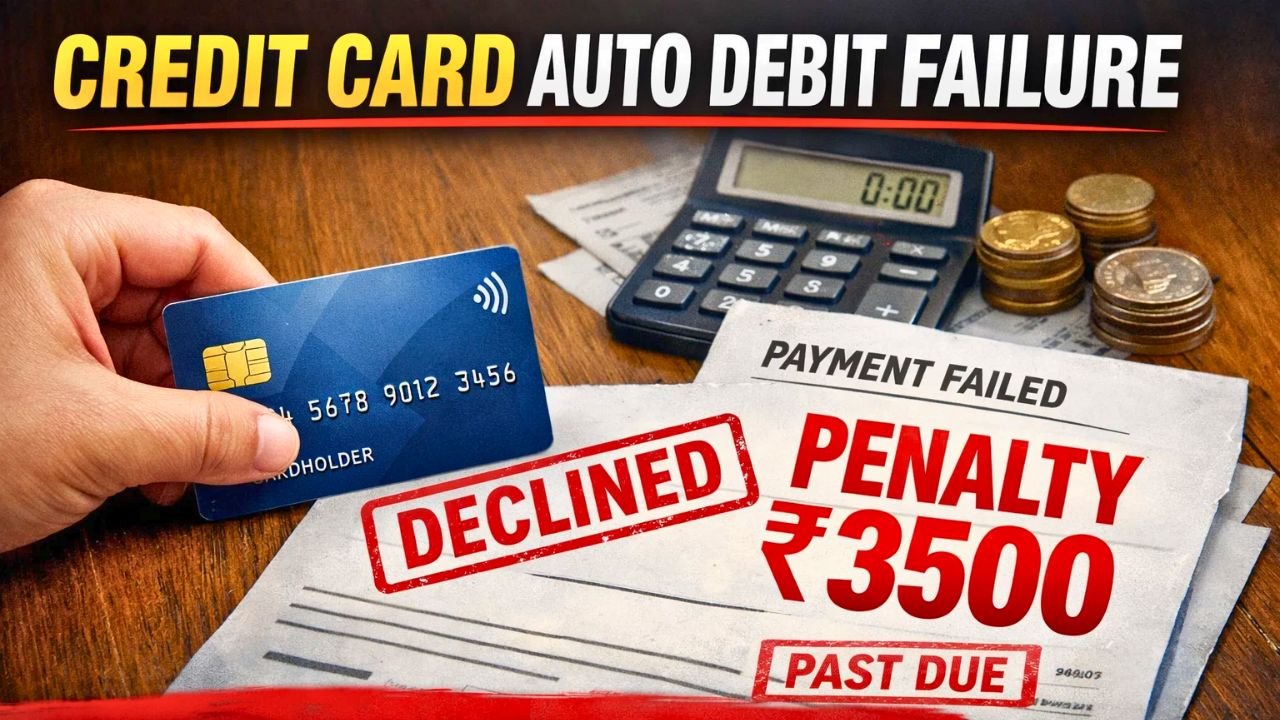
Managing a credit card is easy, until one small technical issue creates a big financial problem. One of the most common issues people face today is credit card auto debit failure. You assume your bill will be paid automatically, but due to low balance, technical error, or mandate issues, the payment fails — and suddenly you’re hit with late payment fees, interest charges, and even credit score impact.
As someone who has covered credit cards and personal finance for over a decade, I’ve seen many people lose money simply because they relied blindly on auto debit without checking confirmation.
Disclaimer: This article is for educational purposes only and does not constitute professional financial advice.
What Is Credit Card Auto Debit?
Credit card auto debit (also called auto pay or standing instruction) is a facility where your card bill amount is automatically deducted from your linked bank account on the due date.
Most banks allow you to choose:
- Total Amount Due
- Minimum Amount Due
- Fixed amount
It sounds safe. But when auto debit fails, the consequences can be expensive.
What Happens If Credit Card Auto Debit Fails?
If your credit card auto debit fails, the bank treats it exactly like a missed payment.
This can lead to:
- Late payment penalty charges
- Interest on outstanding balance
- GST on penalty
- Negative impact on CIBIL score
- Loss of interest-free period
Even if the failure was due to a technical issue, the penalty usually still applies unless you immediately contact the bank.
Common Reasons for Credit Card Auto Debit Failure
Understanding the cause helps prevent future charges.
1. Insufficient Bank Balance
The most common reason. If your savings account does not have enough funds on the due date, the auto debit will fail.
2. Mandate Expiry
UPI or NACH mandates sometimes expire after a set period.
3. Bank Server or Technical Error
Occasionally, technical issues cause the transaction to fail.
4. Change in Bank Account
If you switched salary accounts but didn’t update auto debit instructions, payment fails.
5. Payment Limit Restrictions
Some banks have daily debit limits that block large auto payments.
Credit Card Auto Debit Failure Penalty Charges in India
While every bank has a different fee structure, most follow the RBI consumer awareness guidelines regarding digital payment mandates. Typically, fees range from ₹100 to ₹1,300.
Late Payment Fee
Usually ranges between ₹100 to ₹1,300 depending on the outstanding amount.
Example structure (approximate range):
| Outstanding Amount | Late Payment Fee |
|---|---|
| Up to ₹500 | ₹0–₹100 |
| ₹500–₹1,000 | ₹100–₹500 |
| ₹1,000–₹10,000 | ₹500–₹750 |
| Above ₹10,000 | ₹750–₹1,300 |
You can verify exact fee structures directly from your bank’s credit card terms and conditions.
Interest Charges
Interest on unpaid balance can range from 30% to 42% annually, calculated monthly or daily depending on the bank.
GST on Charges
GST is added to late fees and finance charges.
This is why even one credit card auto debit failure can increase your next bill significantly.
Does Auto Debit Failure Affect CIBIL Score?
Yes.
If the payment remains unpaid beyond the due date, it is reported to credit bureaus as a late payment.
Impact includes:
- Drop in credit score
- Reduced eligibility for future loans
- Higher interest rates on loans
- Difficulty getting premium credit cards
Even a single missed payment can reduce your credit score temporarily. If you want to understand this better, read our detailed guide on 👉 How Credit Card Interest Is Calculated
What To Do Immediately If Auto Debit Fails
If you receive a message that your credit card auto payment failed, act quickly.
- Pay the total amount immediately using net banking or UPI.
- Contact customer care and explain the situation.
- Request reversal of late payment charges (if your past record is clean).
Many banks reverse the first late fee as a goodwill gesture if you have a strong repayment history.
How To Prevent Credit Card Auto Debit Failure
Prevention is always better than paying penalty charges.
Keep Buffer Balance
Always maintain extra funds in your linked account.
Set Payment Reminder
Even with auto debit, set a manual reminder 3 days before due date.
Enable SMS & Email Alerts
So you instantly know if payment fails.
Use Full Amount Auto Pay
Avoid selecting “minimum amount due.” Paying minimum still attracts interest.
Check Mandate Validity
Review UPI/NACH mandate expiry dates.
For first-time card users, you may also find helpful tips in 👉 Personal Finance Planning for First Time Earners
Auto Debit vs Manual Payment – Which Is Better?
Auto debit is convenient but not foolproof.
| Auto Debit | Manual Payment |
|---|---|
| Convenient | Requires effort |
| Risk of failure | More control |
| Less tracking | Active monitoring |
Best strategy?
Use auto debit, but still check your statement monthly.
Real-World Scenario
Imagine your credit card bill is ₹25,000 and Auto debit fails due to low balance.
Possible consequences:
- ₹1,000 late fee
- GST on fee
- Interest applied (around 3–3.5% per month)
- Credit score drop
In just one billing cycle, your ₹25,000 bill can become ₹26,000+ easily.
This is why understanding credit card auto debit failure penalty charges is important.
Frequently Asked Questions
Can banks waive auto debit failure penalty?
Yes, especially if it is your first default and you pay immediately.
Is auto debit 100% safe?
No. Technical issues and low balance can still cause failure.
How many days delay affects CIBIL?
Even a single missed billing cycle can be reported if not corrected quickly.
Should I disable auto debit?
Not necessarily. Instead, monitor it actively.
Final Thoughts
Credit card auto debit failure penalty charges are avoidable. The system is convenient, but blind trust can be expensive. Always maintain balance, monitor alerts, and verify payment confirmation.
One missed auto payment can cost money and damage your credit score. A 2-minute monthly check can save thousands. Stay disciplined. Stay aware. That’s how you protect your financial reputation.
For more practical credit card insights, follow Unifite.in.