Whenever someone applies for a loan, whether it is a home loan, personal loan, car loan, or education loan, the bank or financial company first verifies the documents. Subsequently, an official document is issued stating that the loan has been approved. This document is known as the Loan Sanction Letter.
This letter is not just a piece of paper. It serves as proof of the bank’s decision regarding the loan amount, interest rate, tenure, and the terms and conditions under which the loan is being granted.
What is a Loan Sanction Letter?
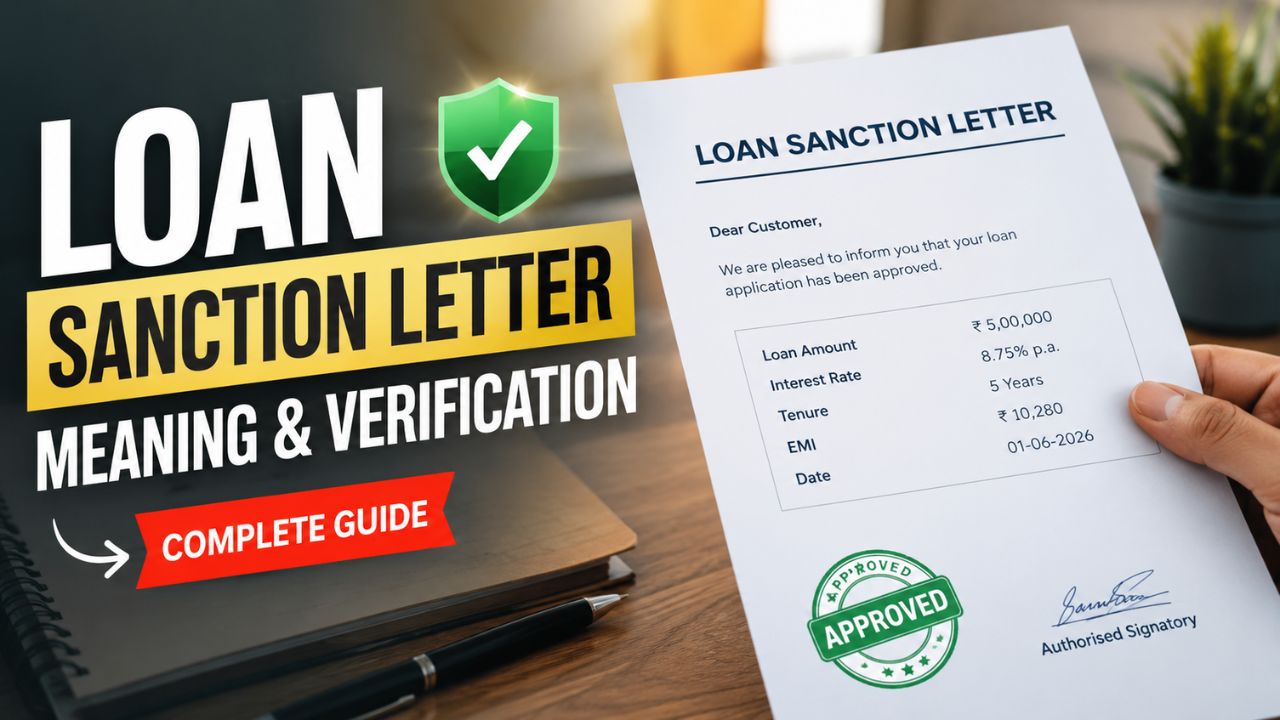
A Loan Sanction Letter is an official document issued by a bank or NBFC (Non Banking Financial Company) once your loan application has been approved.
This letter contains clear details regarding:
- The approved loan amount
- The applicable interest rate
- The loan tenure (duration in years)
- The monthly EMI amount
- Any processing fees, insurance, or additional charges
- Details of collateral (property, gold, etc.) in the case of a secured loan
- The validity period of the letter
You receive this letter after applying for the loan, once the bank has verified your income proof, identity, address, and credit score.
When and Why is a Loan Sanction Letter Issued?
The bank issues a sanction letter so that you are clearly informed that:
- The loan has been officially approved
- The specific amount that will be credited to your account
- The monthly repayment amount
- The terms and conditions that must be adhered to
If you apply online, this letter can be downloaded via email or the bank’s mobile app. If you apply offline at a branch, you receive a physical copy.
Important Note: Receiving a sanction letter does not mean the funds have been immediately credited to your account. Following this, you must accept the letter and submit certain final documents. Only then does the loan disbursement (transfer of funds) take place.
What Details Does a Loan Sanction Letter Contain?
| Details | Information |
|---|---|
| Loan Amount | Total amount approved by the bank |
| Interest Rate | Fixed or floating interest rate |
| Loan Tenure | Duration in years or months |
| Monthly EMI | Monthly repayment amount |
| Validity Period | How long the sanction letter remains valid |
| Terms and Conditions | Collateral, processing fees, insurance, or other applicable rules |
How to Verify a Loan Sanction Letter?
Sometimes, fake sanction letters circulate. Therefore, verification is essential.
- The letter should bear the bank’s official letterhead and stamp.
- The application number and loan account number must match.
- It should originate from the bank’s official email ID, not a personal email.
- You can confirm by calling the bank’s customer care number.
- You can check the status by logging into online banking or the mobile app.
If a private agent or third party shows you a sanction letter and asks for an advance fee, avoid them immediately. Genuine banks never ask for money upfront.
FAQs
How long does it take to receive the funds after getting the Loan Sanction Letter?
Usually within 7 to 15 days, provided you have submitted all final documents on time.
Can the bank reject the loan after issuing a Loan Sanction Letter?
Yes, if any discrepancy is found during final verification, the bank can reject the loan before disbursement.
How can I download the sanction letter for an online loan?
You can download it from the Loan Status section after logging into the bank’s official app or website.
What should I do if the sanction letter expires?
You have to submit a new application. The old letter is no longer valid.
Conclusion
A Loan Sanction Letter is an important official document confirming that the bank has approved your loan. It clearly outlines the loan amount, interest rate, EMI, and terms and conditions. After receiving this letter, you must complete the final formalities before the funds are credited to your account.
If you are planning to take a loan, read this letter carefully, understand the conditions, and ensure you verify its authenticity. If you have any doubts, please confirm directly with the bank.