
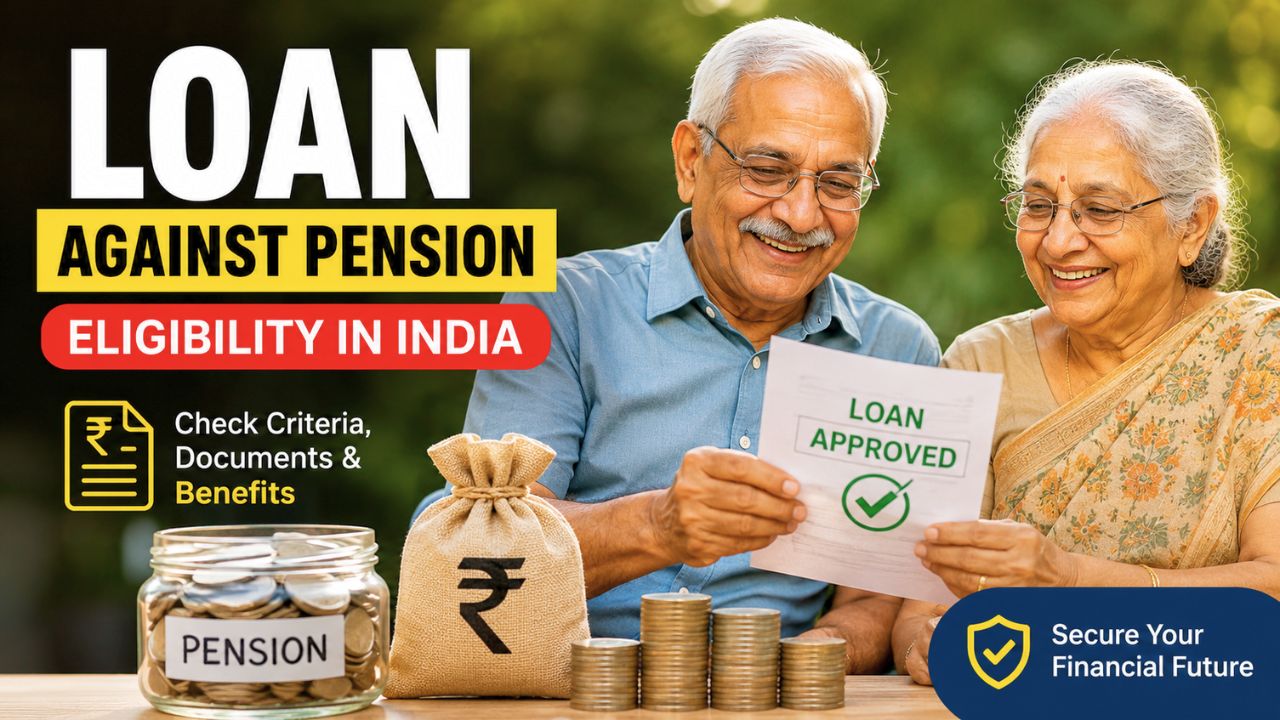
Retirement doesn’t always mean the end of financial responsibilities. Medical emergencies, home repairs, children’s education, weddings, or unexpected expenses can arise at any stage of life. In situations like these, many retired individuals look for financial support without disturbing their long-term savings.
One option that often comes up is a Loan Against Pension. Since pension provides a regular source of income, several banks and financial institutions consider it while evaluating loan applications.
However, not every pensioner qualifies automatically. Eligibility depends on multiple factors, including the type of pension, the applicant’s age, monthly pension amount, and the lender’s internal policies.
Understanding the Loan Against Pension Eligibility in India before applying can help you avoid unnecessary loan rejections and choose the right lender.
What Is a Loan Against Pension?
A loan against pension is a type of personal loan offered to eligible pensioners based on their regular monthly pension income. Instead of evaluating salary income, lenders assess the applicant’s pension amount and repayment capacity.
These loans are generally unsecured, which means most banks do not require property or other valuable assets as collateral. The pension itself acts as proof of stable income, making it easier for eligible applicants to access funds when needed.
Who Is Eligible for a Loan Against Pension?
While eligibility criteria vary between banks and NBFCs, most lenders look at a few common factors before approving the application.
Generally, you may be eligible if:
- You receive a regular monthly pension.
- Your pension is credited to a recognized bank account.
- You meet the lender’s minimum and maximum age criteria.
- You have a satisfactory repayment history.
- You can demonstrate sufficient repayment capacity after meeting monthly expenses.
Government pensioners often find it easier to qualify because their pension income is considered relatively stable. However, some private pensioners may also be eligible depending on the lender’s policies.
Documents Usually Required
Although documentation requirements may differ, most lenders typically ask for:
- Aadhaar Card or another identity proof
- PAN Card
- Recent passport-size photographs
- Pension Payment Order (PPO)
- Recent pension slips
- Bank account statements
- Address proof
- Completed loan application form
Submitting accurate and updated documents can help speed up the verification process.
How Much Loan Can You Get?
The loan amount depends on several factors rather than a fixed limit.
Banks generally consider:
- Monthly pension income
- Existing loan obligations
- Applicant’s age
- Repayment tenure
- Credit history
- Individual lending policies
Applicants receiving a higher monthly pension with minimal existing liabilities generally have a better chance of qualifying for a larger loan amount.
Things to Consider Before Applying
Taking a pension-based loan should always be a carefully planned financial decision.
Before submitting your application, consider the following:
- Compare interest rates offered by different lenders.
- Check processing fees and other applicable charges.
- Choose a repayment tenure that comfortably fits your monthly budget.
- Avoid borrowing more than you genuinely need.
- Read the complete loan agreement carefully before signing.
These simple steps can help prevent unnecessary financial pressure after retirement.
Benefits of a Loan Against Pension
A Loan Against Pension offers several practical advantages for eligible applicants.
- Regular pension income improves loan eligibility.
- Most loans do not require collateral.
- Funds can usually be used for multiple personal purposes.
- Flexible repayment options are often available.
- The application process is generally simpler than many other loan products.
However, approval is always subject to the lender’s eligibility assessment and internal policies.
Common Reasons Why Applications Get Rejected
Many pensioners assume that receiving a pension automatically guarantees loan approval, but that’s not always the case.
Some common reasons for rejection include:
- Low monthly pension income
- Existing high loan obligations
- Poor credit history
- Age exceeding lender limits
- Incomplete or incorrect documentation
Understanding these factors beforehand can improve your chances of approval.
Final Thoughts
A Loan Against Pension Eligibility in India depends on much more than simply receiving a monthly pension. Lenders evaluate your repayment capacity, documentation, age, and financial profile before making a decision.
If you are planning to apply, compare different lenders, understand all applicable charges, and borrow only an amount that comfortably fits your monthly pension income. Responsible borrowing can help you manage unexpected expenses without putting unnecessary pressure on your retirement finances.
Frequently Asked Questions
Can pensioners get a personal loan in India?
Yes. Many banks and financial institutions offer personal loans to eligible pensioners based on their monthly pension income and repayment capacity.
Is collateral required for a loan against pension?
In many cases, no. Several lenders offer unsecured pension loans, although eligibility requirements vary.
Does my credit score matter?
Yes. A healthy credit history can improve your chances of loan approval and may help you receive better loan terms.
Can private pensioners apply for a pension loan?
Some lenders also consider private pensioners, but eligibility depends on their lending policies and the stability of the pension income.
What should I compare before choosing a lender?
Always compare interest rates, processing fees, repayment tenure, total borrowing cost, and eligibility requirements before applying for a pension loan.





![How to reduce battery drain after [AndroidiOS version] update](https://unifite.in/wp-content/uploads/2026/10/How-to-reduce-battery-drain-after-AndroidiOS-version-update-100x70.jpg "How to Reduce Battery Drain After an Android or iOS Update (2026)")
![Best educational apps for adults learning [skill]](https://unifite.in/wp-content/uploads/2026/10/Best-educational-apps-for-adults-learning-skill-100x70.jpg "Best Educational Apps for Adults Learning New Skills in 2026")